



















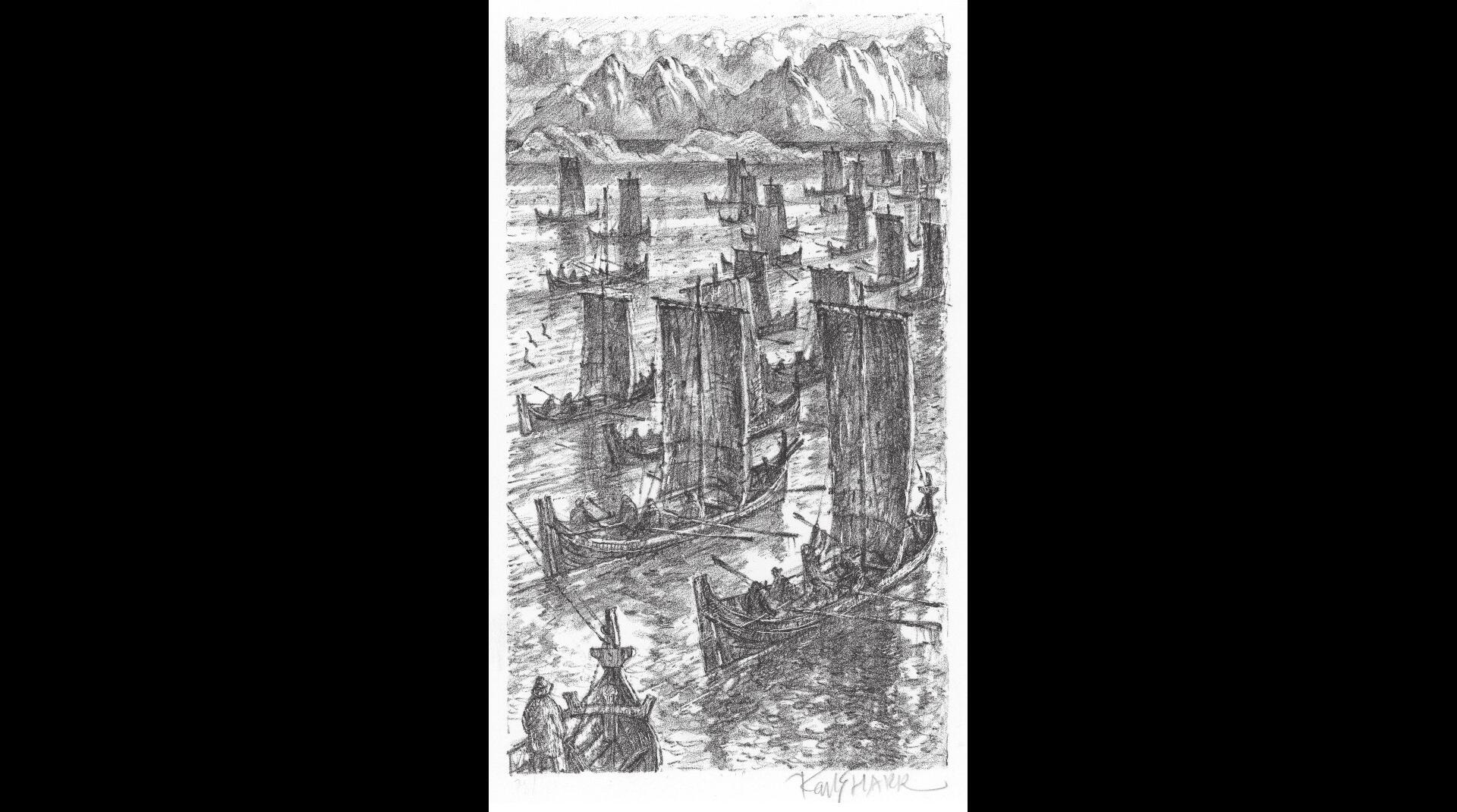
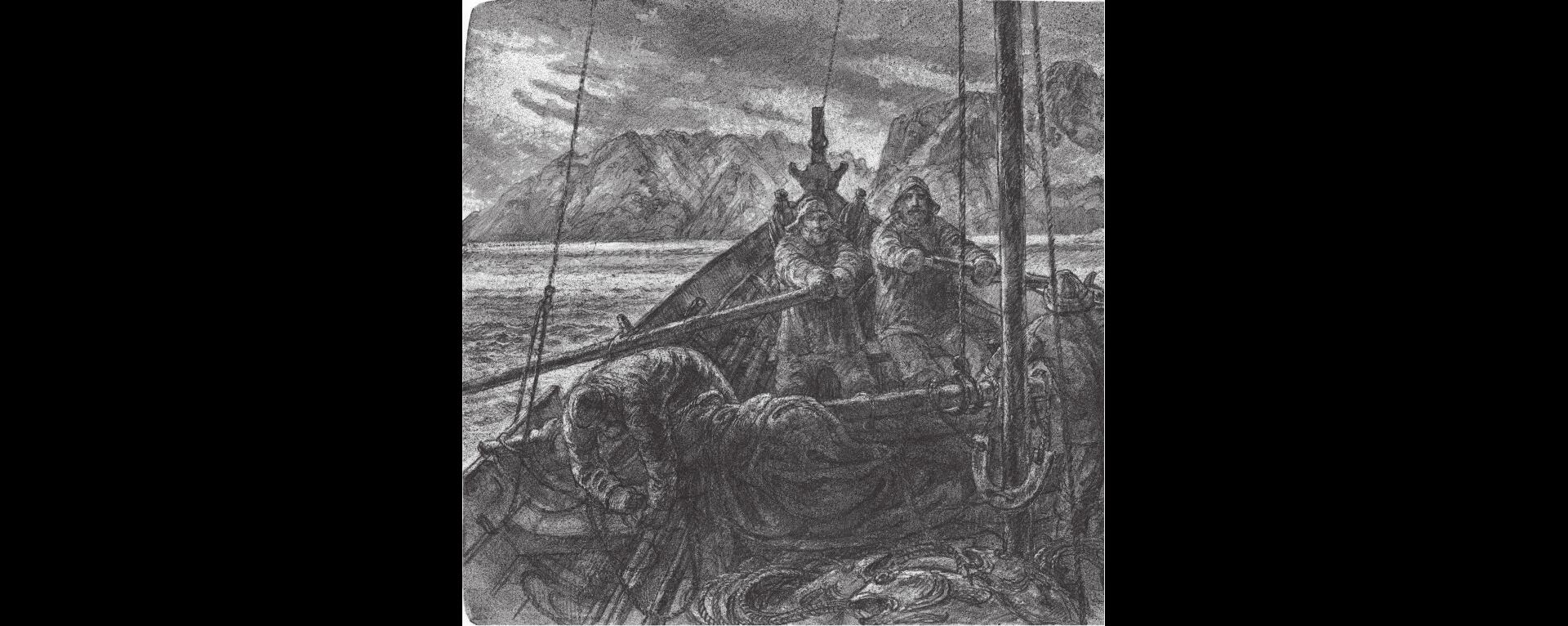
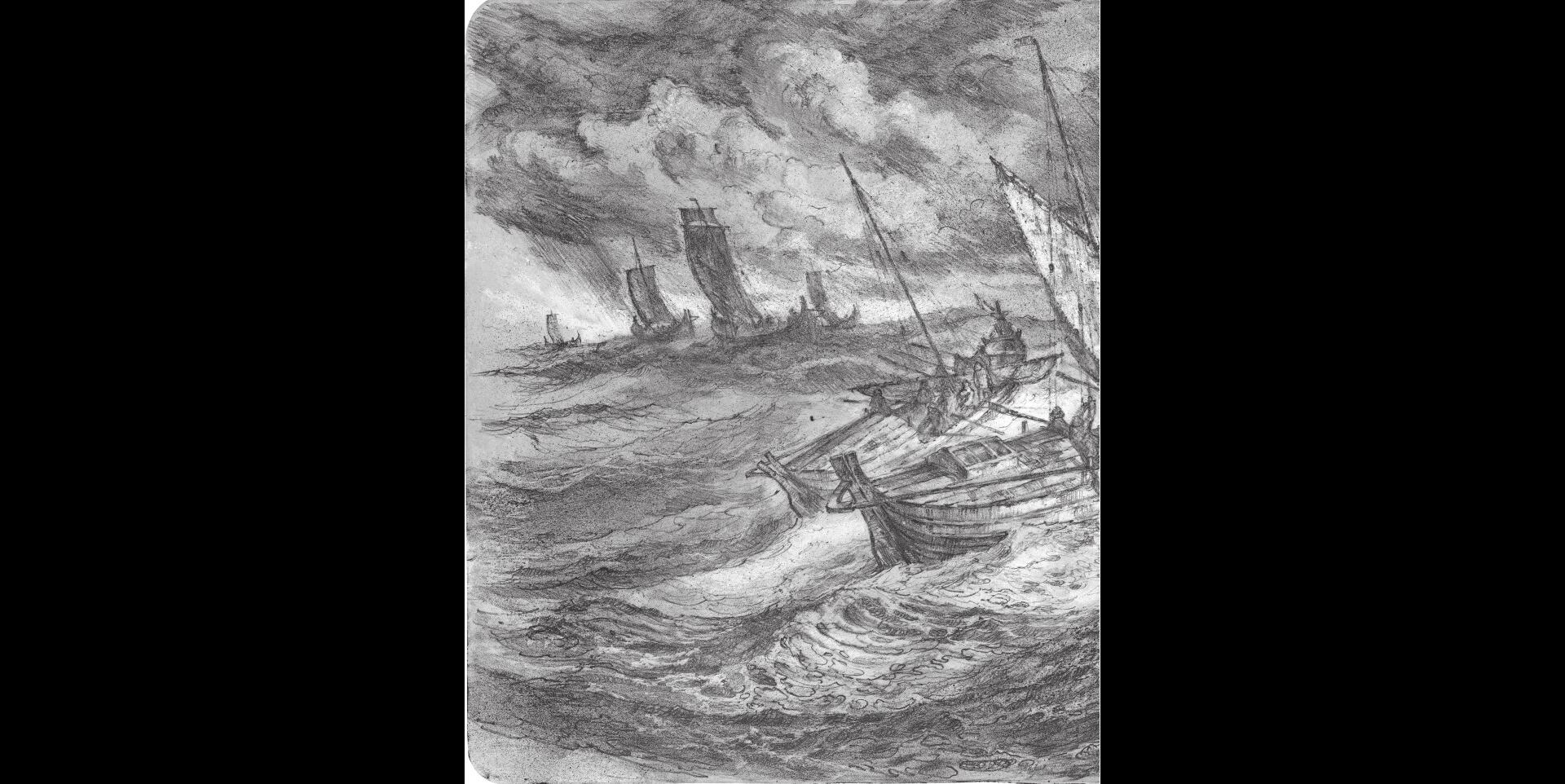
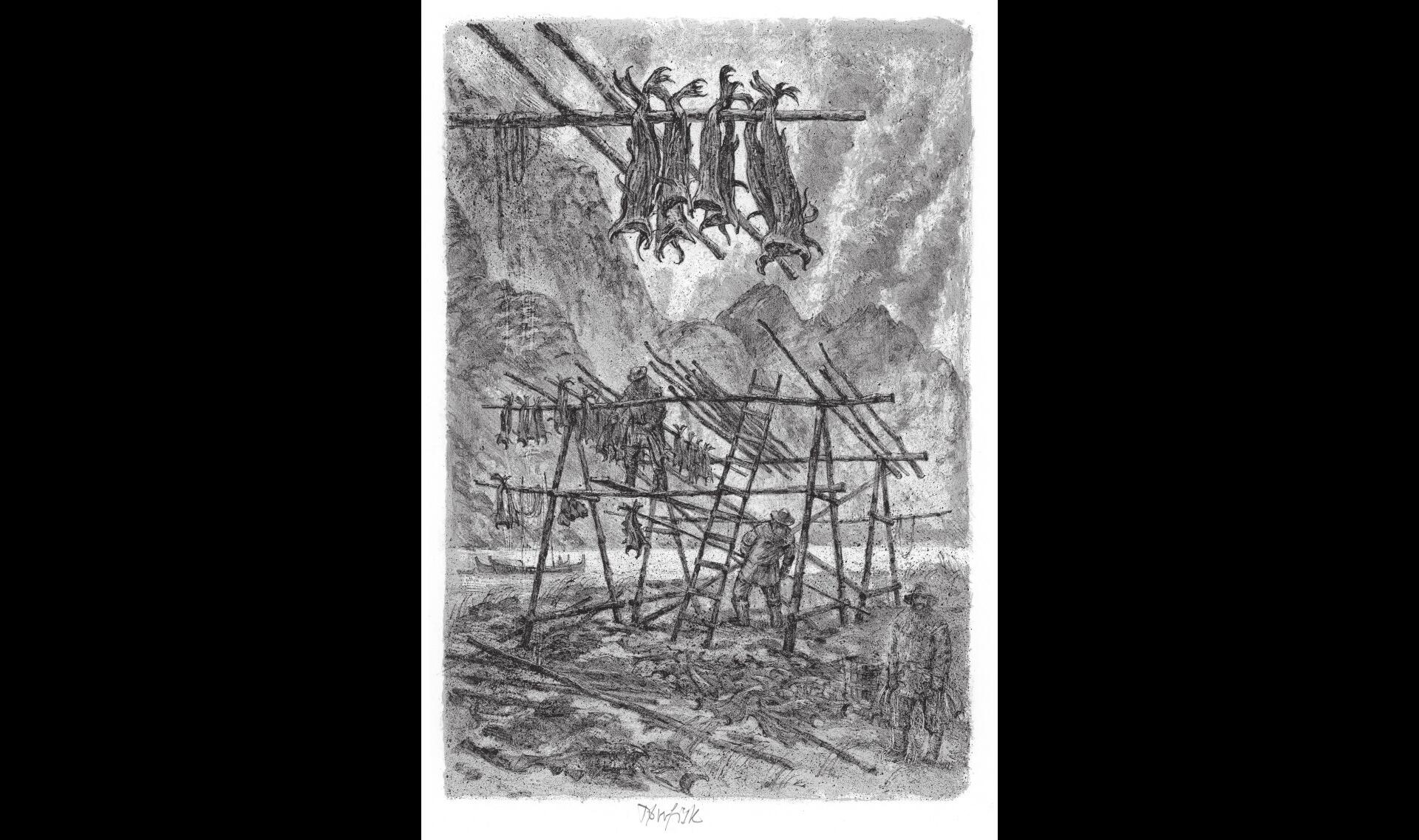
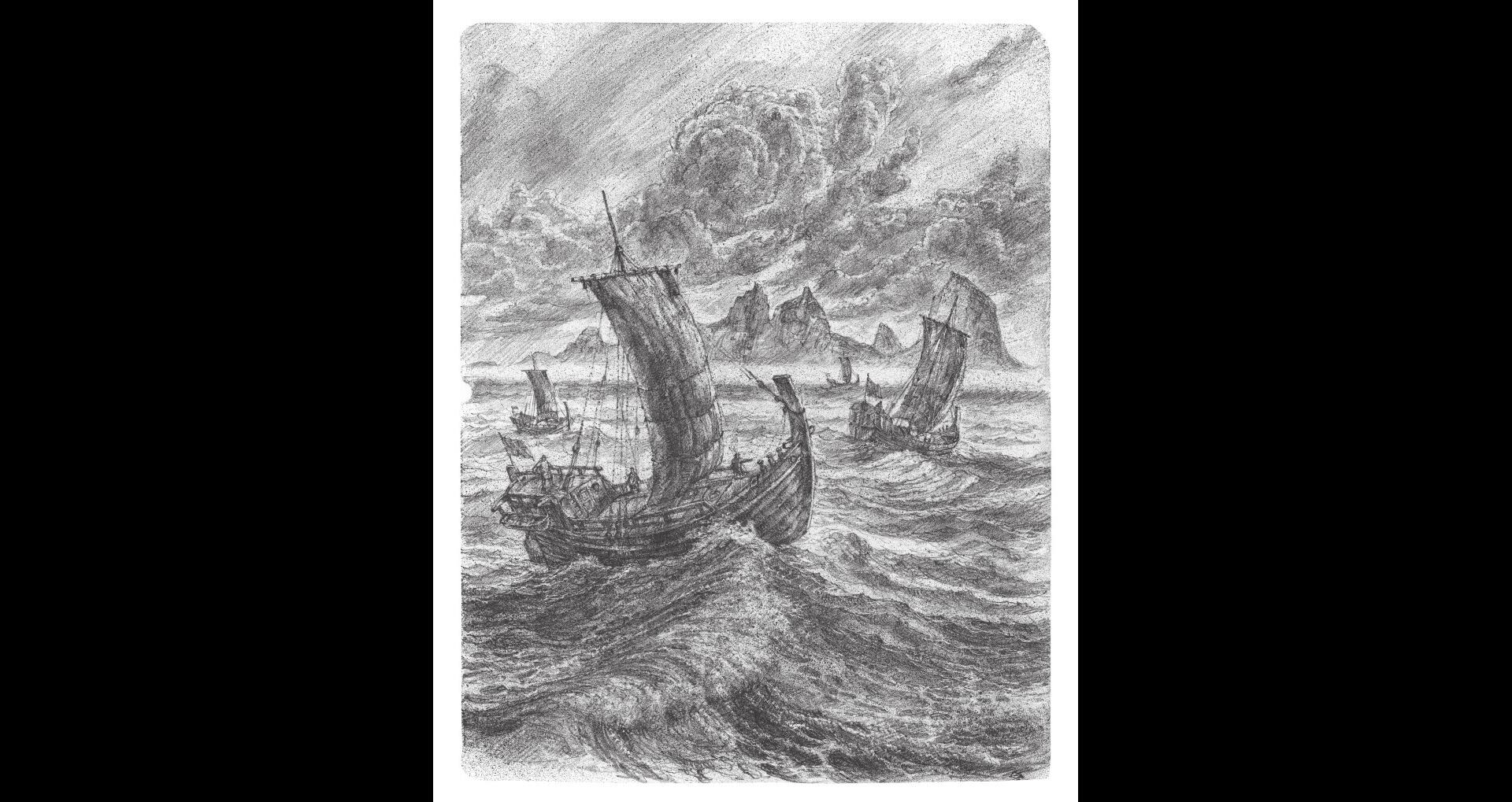
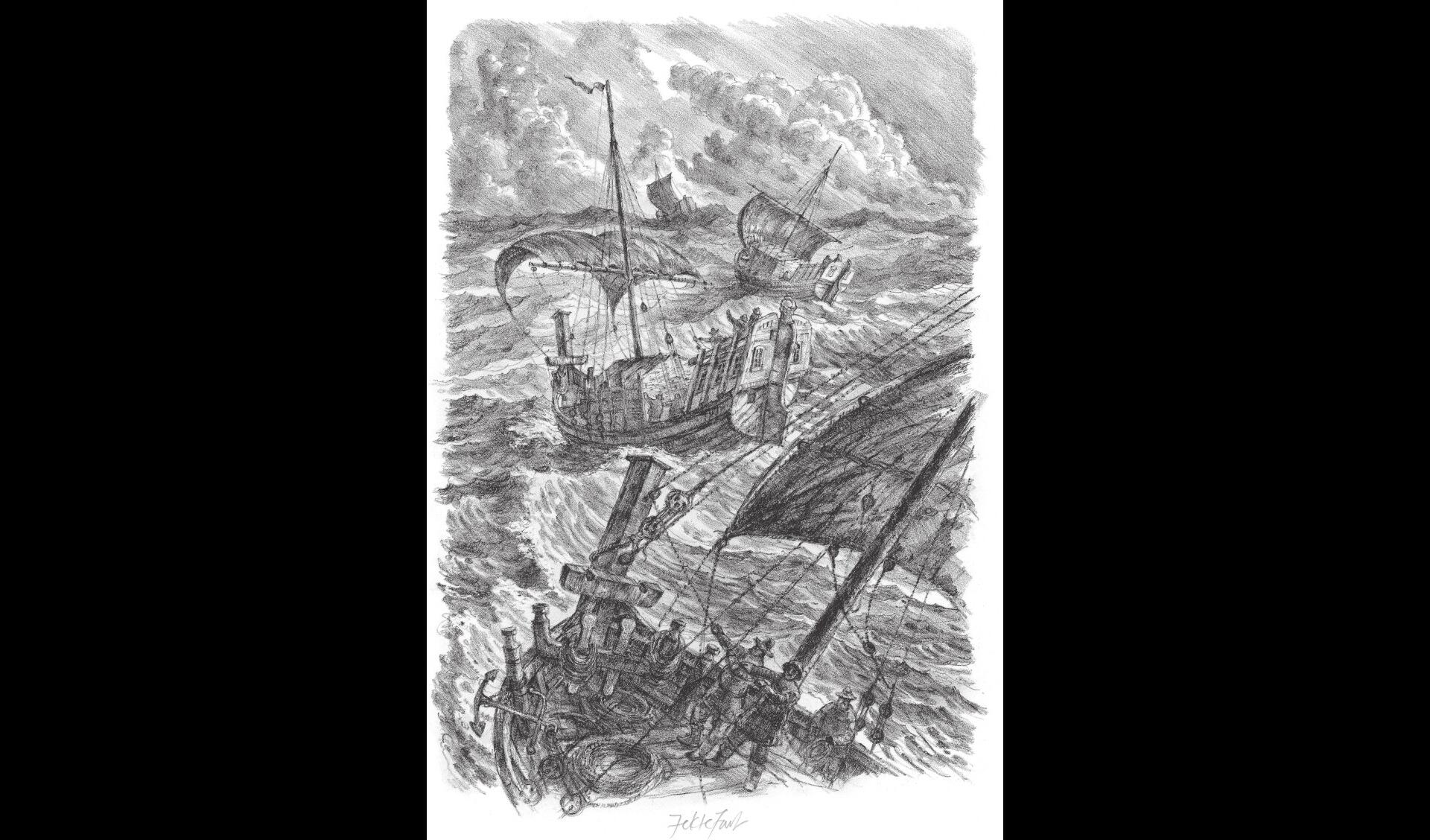
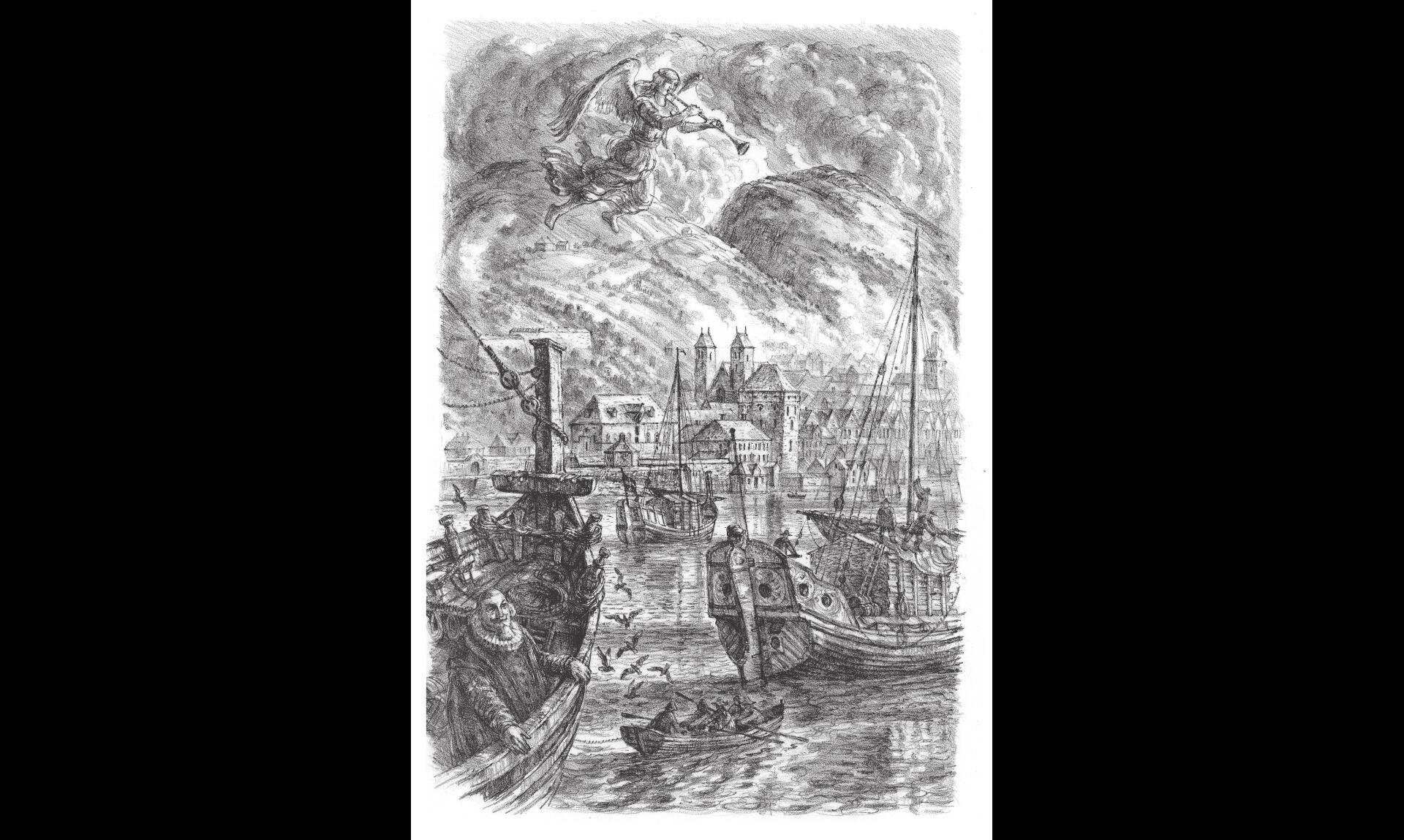
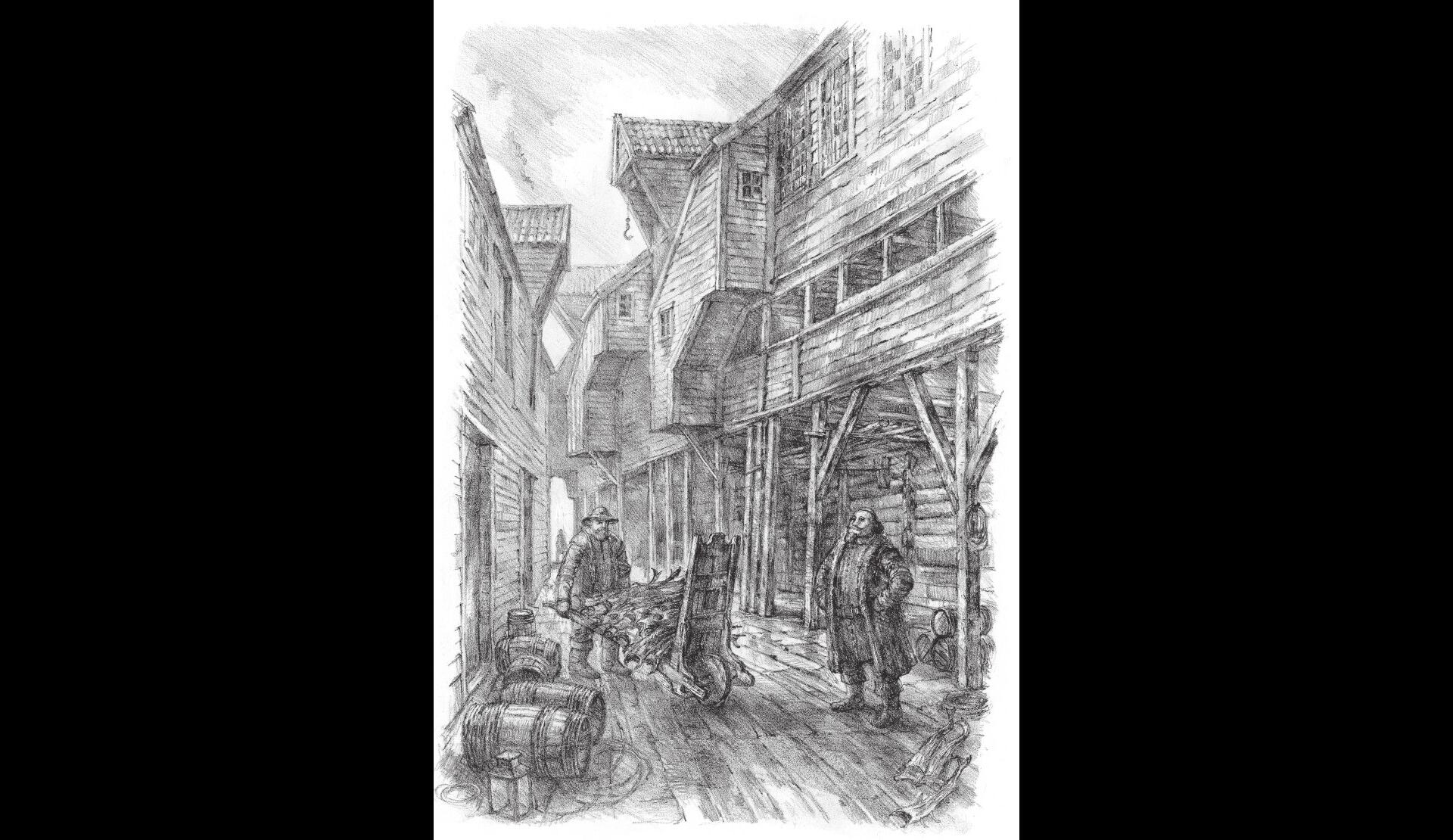

The trade in stockfish was gradually taken over by specialised cargo ships (‘jektene’). Many ‘jekt’ boats were built in the Northern Norway fjord villages where there was a rich source of good wood. There is an interesting report on Røst in ‘Lofoten og Vesterålens beskrivelse’, written by Erik Hansen Schønnebøl in 1591. The author says that there were hard times on Røst and Værøy, the rich fishing being further in along Lofoten. Remains of larger buildings from previous boom periods show that there had been good fishing here:
The very best fishing
Here the sea and weather in former times gave a large and unusual trading and merchant activity greater than anywhere else in all Norland, because all the fish which now is caught both out in Voge and Skrogen and elsewhere along Lofoten previously was out at Röst and Verröe where the very best fishing was and exceptional trade. Here also lived very rich men, which you can still see to this day in the wonderful buildings and houses that have been built with brick chimneys and other features which are now destroyed.
The truth of this is difficult to determine. It does, however, tell about Lofoten fishing which varied depending on where the bulk of the spawning cod was. Schønnebøl tells more about Røst having ‘jekt’ boats to transport goods with:
All the wood which they used they bought in Salten and transported home by ‘jegter’.
Petter Dass
Petter Dass (1647–1707), parson, stockfish merchant and poet is a good source of reports of Lofoten fishing, ‘jektefart’ and stockfish trading in the work Nordlands Trompet. Fishing could vary a great deal in scope and yield. The last half of the 1600s and the beginning of 1700s were, however, a time of crisis in fishing. The period in which Petter Dass wrote Nordlands Trompet, the end of 1600s, were furthermore dark years for fishing in Skrova and Vågan, he says. Here the good times are remembered:
I am reminded of some earlier years,
That Vaagen and Skroven each winter and spring
Were well-known places ...
Where every other North Norway man strove …
He describes that there were many fishermen from Helgeland and Salten here on Værøy and Røst:
At these two common places,
A mass of sturdy Salten residents were found
and Helgeland farmers too
https://en.wikipedia.org/wiki/Petter_Dass
Original text: from Elisabeth Johansen, Anne Cecilie Pedersen, Einar Stamnes (2018)
Tørrfisk – kystkultur, kokekunst, Querini. Stamsund: Orkana forlag.
Reference work:
Bagge, Sverre og Knut Mykland (1996) Norge i dansketiden. Oslo: Cappelen forlag
Dass, Petter (2006) Opptrykk ved Didrik Arup Seip: Nordlands Trompet. Oslo; Aschehoug Forlag
Lindbekk, Kari (red.) (1978). Lofoten og Vesterålens historie 1500–1700. Stavanger: Dreyer a/s
Translation to English: Alasdair Graham-Brown
Illustrations:
Karl Erik Harr, from the book Mit navn er Petter Dass – som boer ved verdens ende, Orkana 2007. Reproduced with the artist's permission.