



















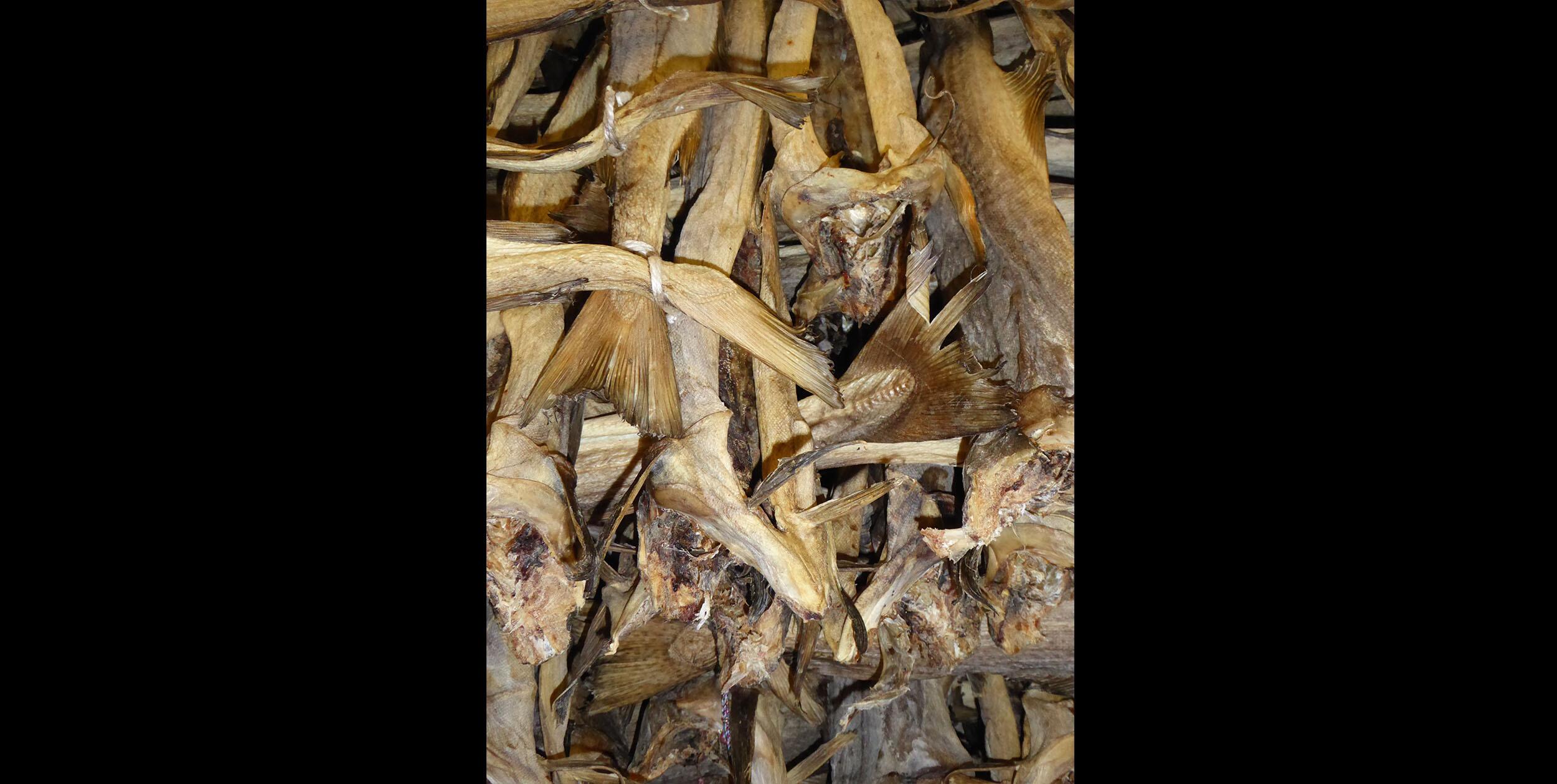
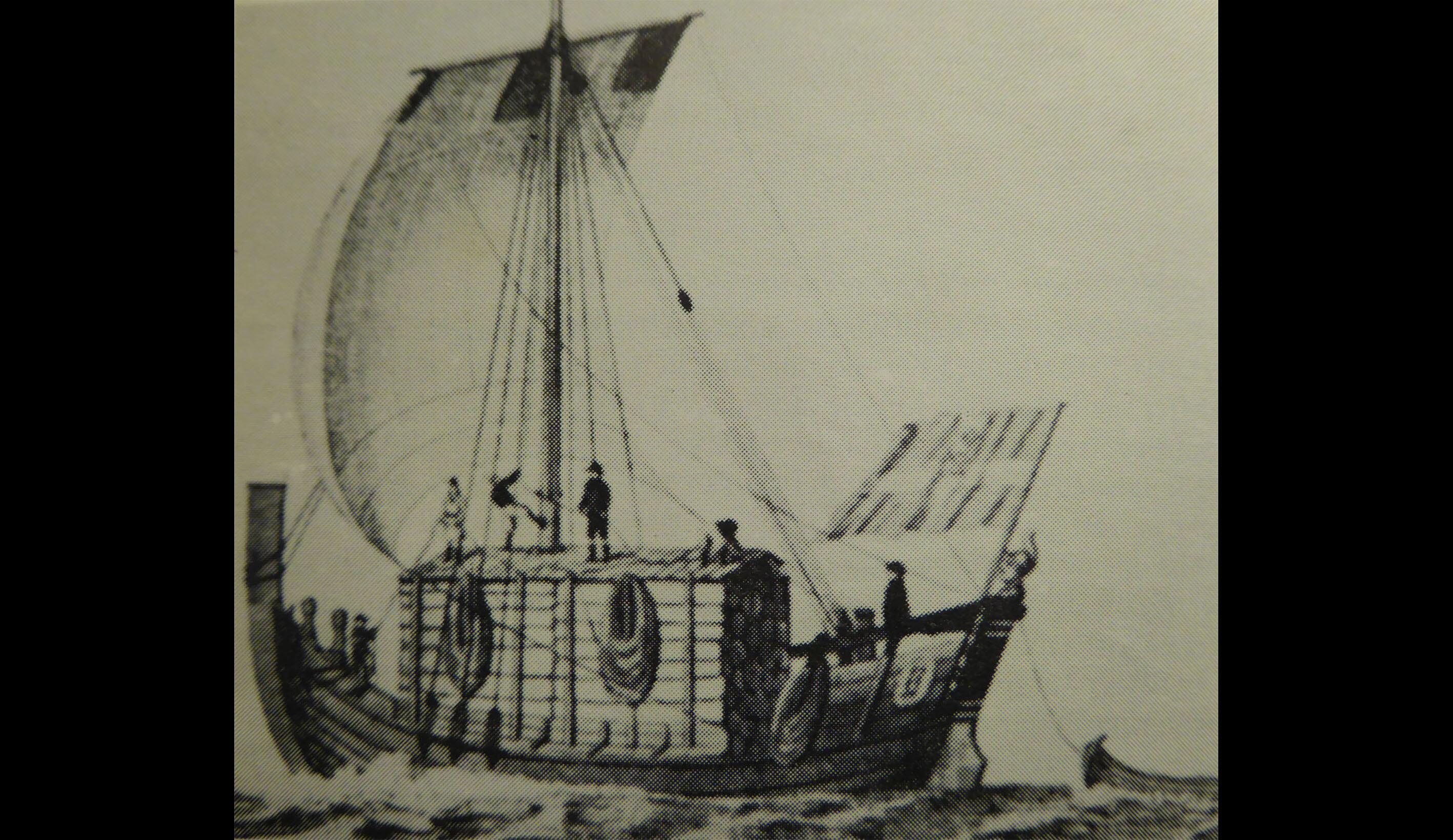
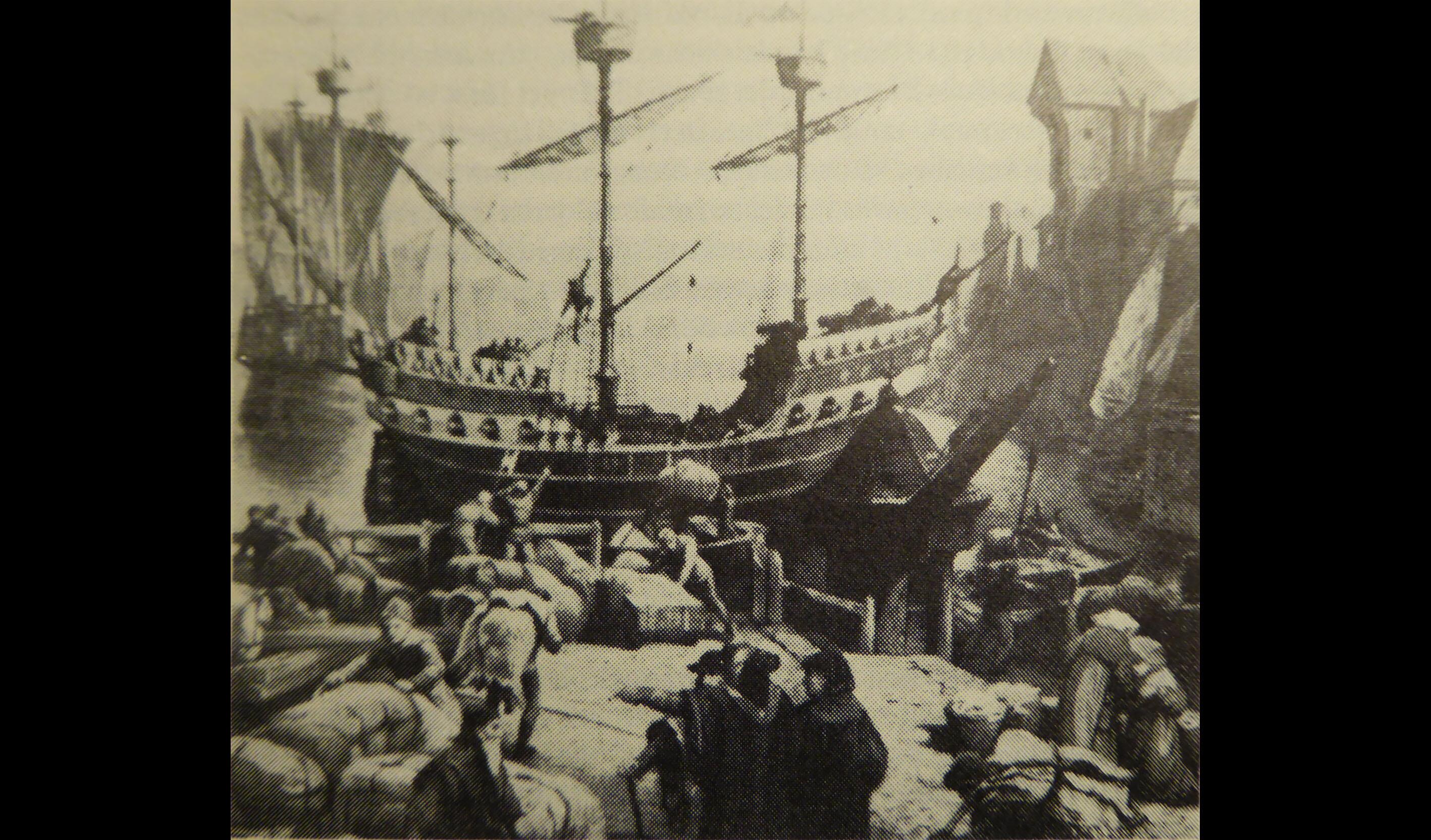

Grain was the most important barter good for the fish in Bergen and a three-way trade developed. Hanseatic ships transported grain, flour and beer from the Baltic ports to Bergen, continuing from Bergen with stockfish to England or Flanders. Wool cloth was then transported from England and Flanders back to the Baltic harbours.
Herbs and spices
There were, however, a number of other goods available in Bergen. This included herbs and spices and dried fruit that came to Flanders and England by ship from, for example, Venice and Genova. It also included finer cloth, glass items and wine. Luxury goods such as leather, furs and walrus teeth also came from other parts of Scandinavia and Greenland.
Luxury items
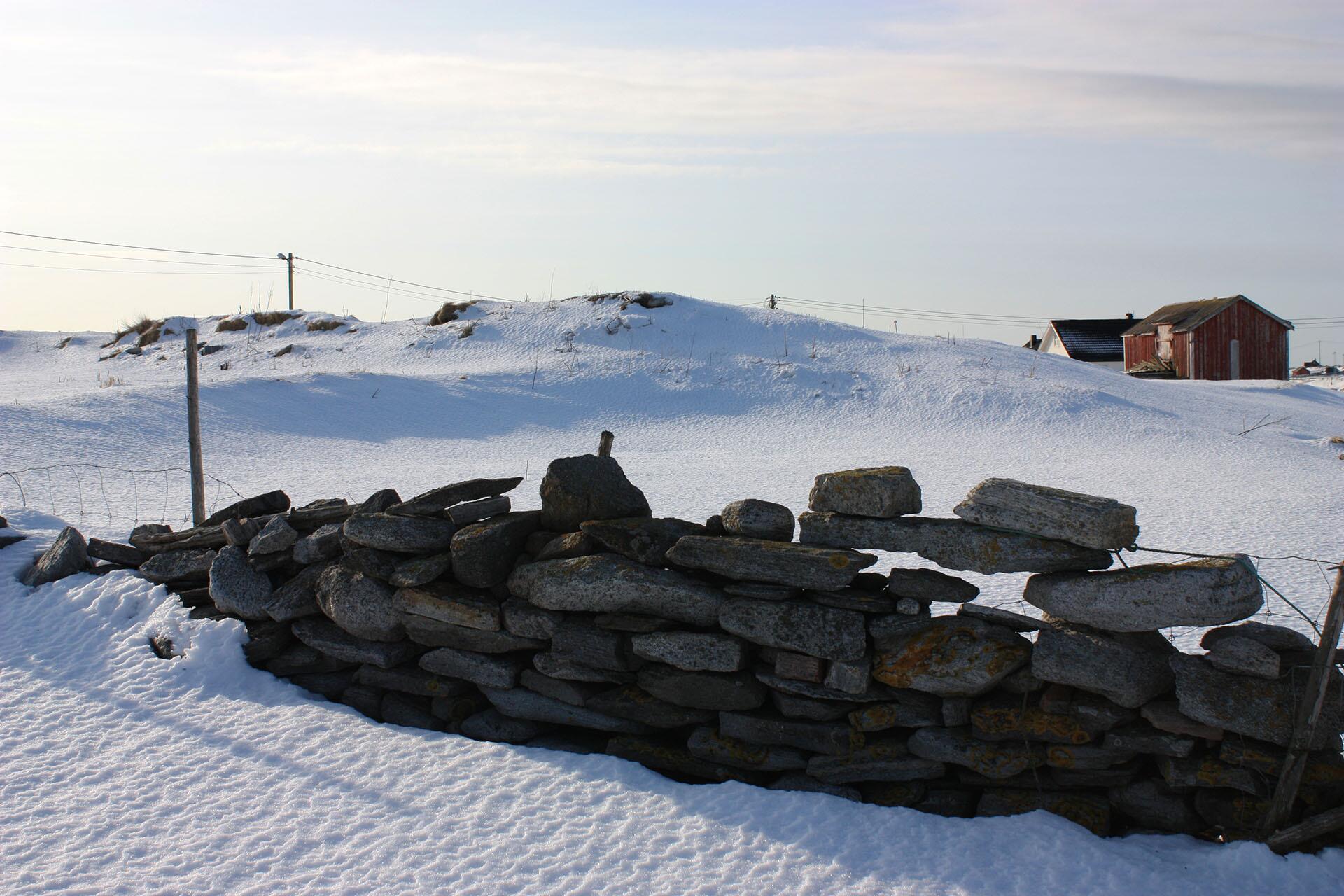
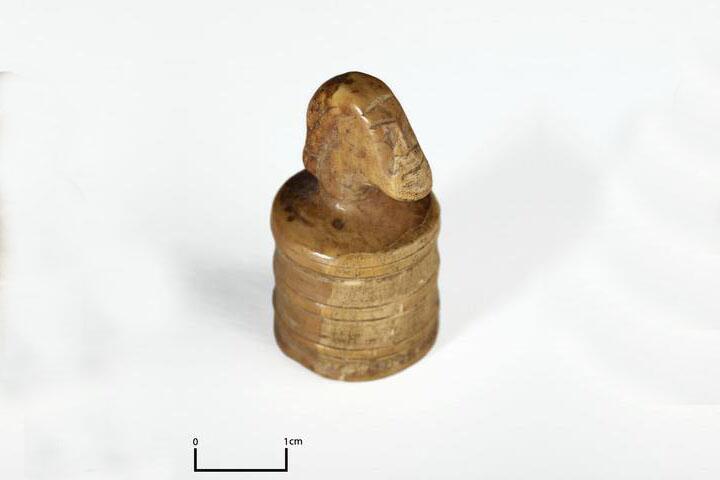
There is a number of farm and settlement remains on Røst which have been built up as large raised areas in the landscape over hundreds of years. Luxury items have been found at a number of these sites that indicate early and profitable trade. This includes the find of embossed gold rings on Skau farm and a finely scalloped chess piece in walrus tooth in the farm remains on Ystnes. This comes from the Middle Ages, walrus tooth being one of the most important trading goods from Greenland. One can imagine it being made in one of the many craftsmen’s workshops in Bergen at that time.
Increase in imported goods
Investigations from Vågar, the trading centre by Kabelvåg in Vågan, indicates that the development from a more seasonal fishing village to a more town-like settlement and function took place in the period between 1200 and 1400. Finds in Northern Norway farm remains also show a clear increase in imported goods from the 1200s, indicating an increased trade in stockfish which was profitable enough to allow expensive import goods to be acquired at a number of places.
The price of stockfish increased
The devastation of plague had a very significant effect on settlements and trade in Norway. There were more than 20 outbreaks in the period 1349–1654, the Black Death being the most well known. These continuous outbreaks led to many farms being deserted. On Røst, the farms on the mountain island of Storfjellet appear to have been abandoned in the 1300s. Røst was therefore subject to pandemics despite its isolated location. More was clearly brought home to the island from trading with the hinterland and Bergen than goods.
https://en.wikipedia.org/wiki/Black_Death
The price of stockfish increased significantly compared with grain in the period 1350 -1500 due to lower production levels and gradually increasing demand. This is reflected in the impression gained from the finds in farm remains, higher prices yielding more import goods. Total stockfish export was estimated to be around 2000 tons in 1577. This equals the amount exported solely to England in the early 1300s. But now almost all export of Norwegian stockfish went to the German Hanseatic towns.
Trade from Bergen
Trading between the west coast and North Norway and the farm produce trading system between North Norway and Bergen became established in this period. Trade from Bergen continued. However the number of inland merchants became so reduced that North Norway residents began to transport fish to Bergen themselves rather than merchants from the south collecting fish from Lofoten.
Tørrfisk – kystkultur, kokekunst, Querini. Stamsund: Orkana forlag.
Original text: Elisabeth Johansen, Anne Cecilie Pedersen, Einar Stamnes (2018)
Reference work:
Nielssen, Alf Ragnar. (red.) (2014) “Fangstmenn, fiskerbønder og værfolk”. Norges fiskeri og kysthistorie. Bind 1. Bergen: Fagbokforlaget
Simonsen, Povl. (1991) Fortidsminner nord for polarsirkelen. Oslo: Universitetsforlaget
Translation to English: Alasdair Graham-Brown