


















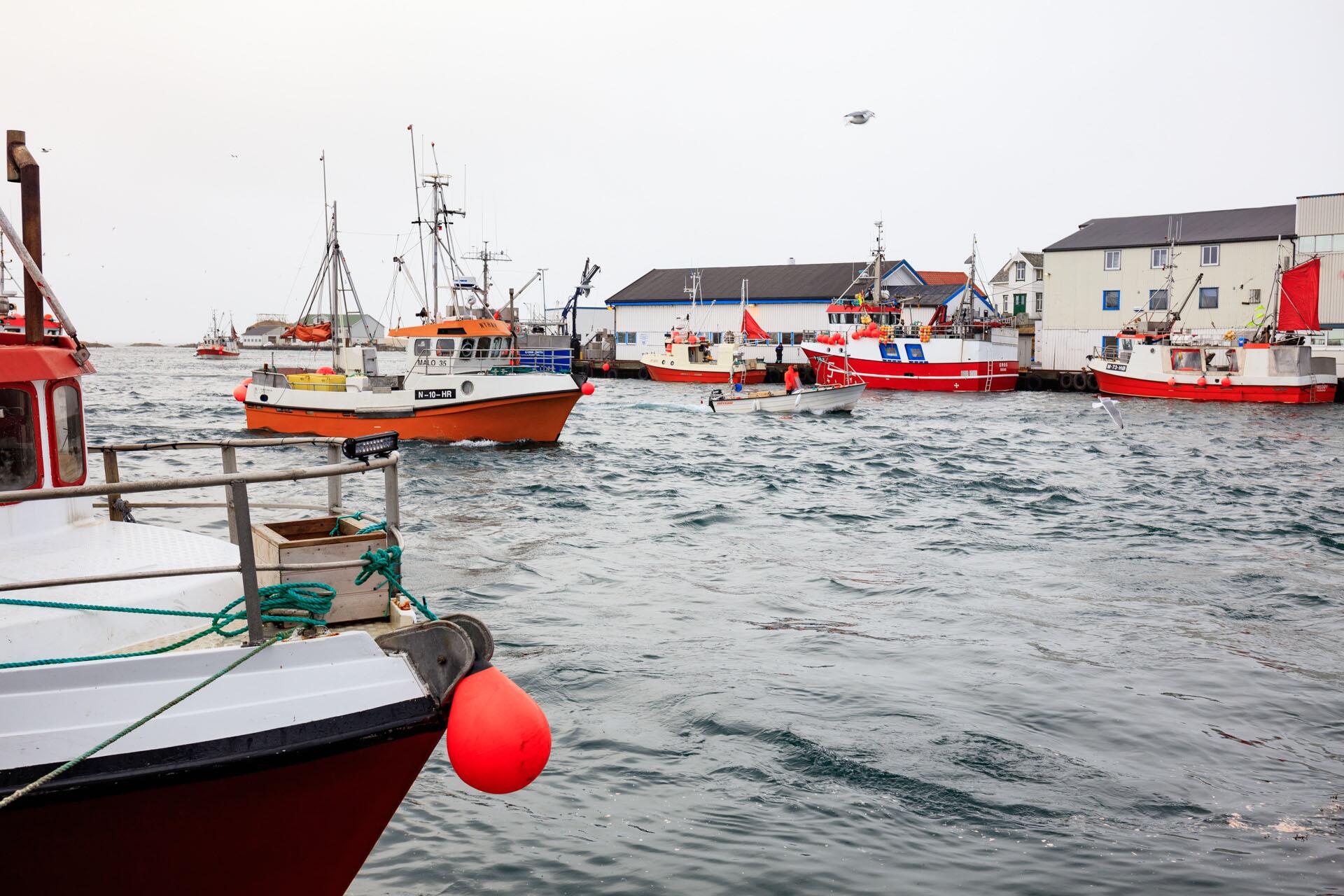
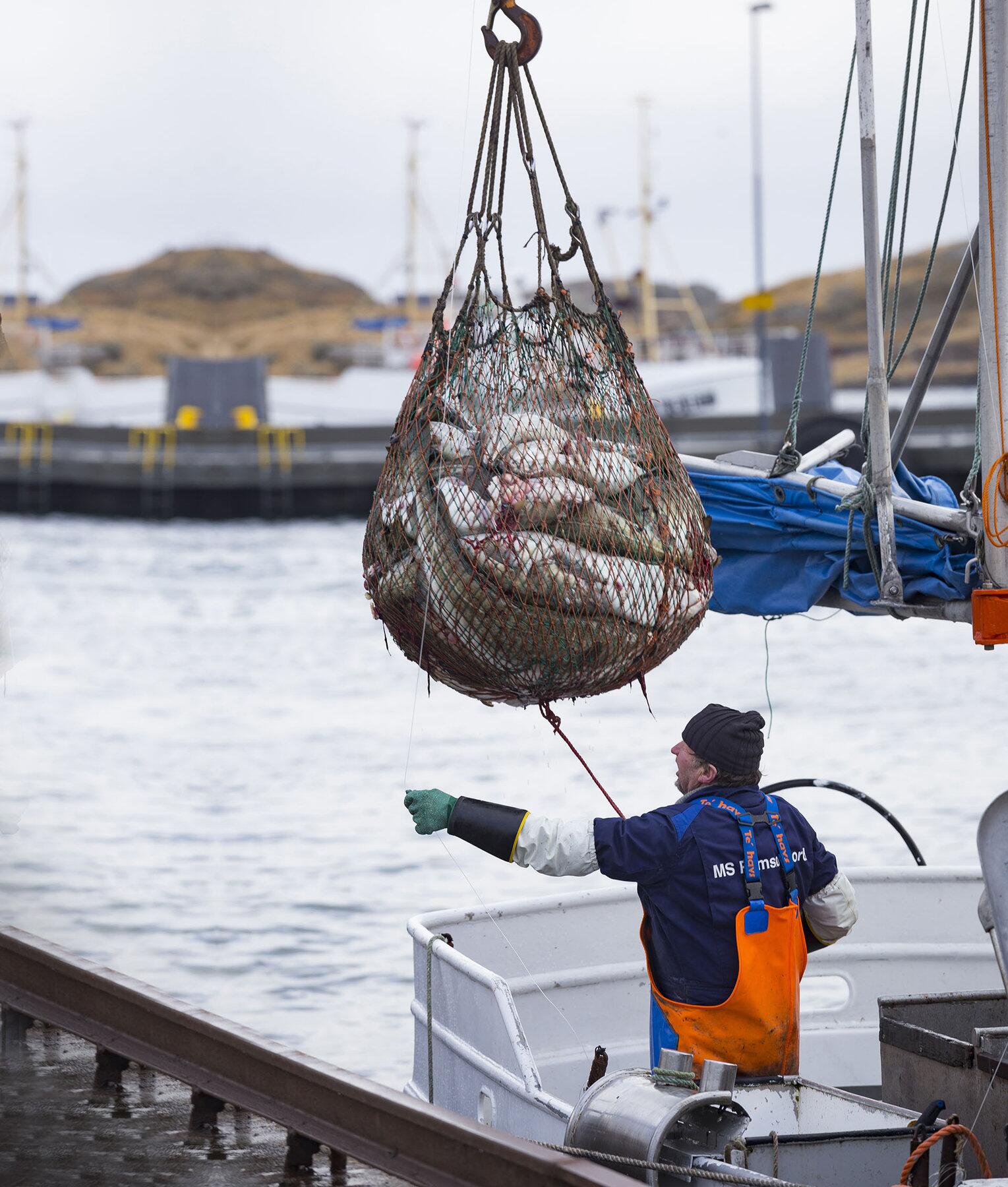
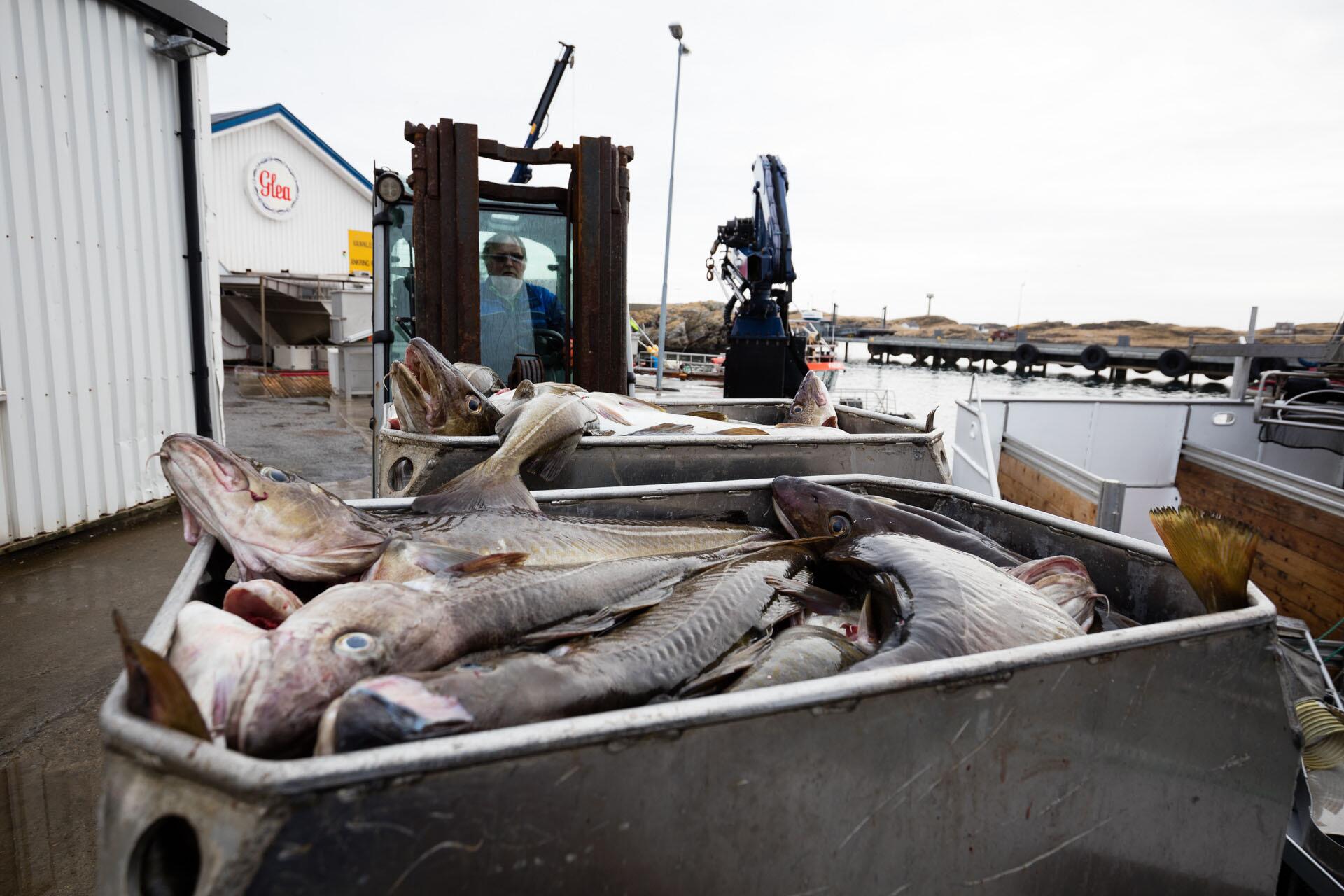
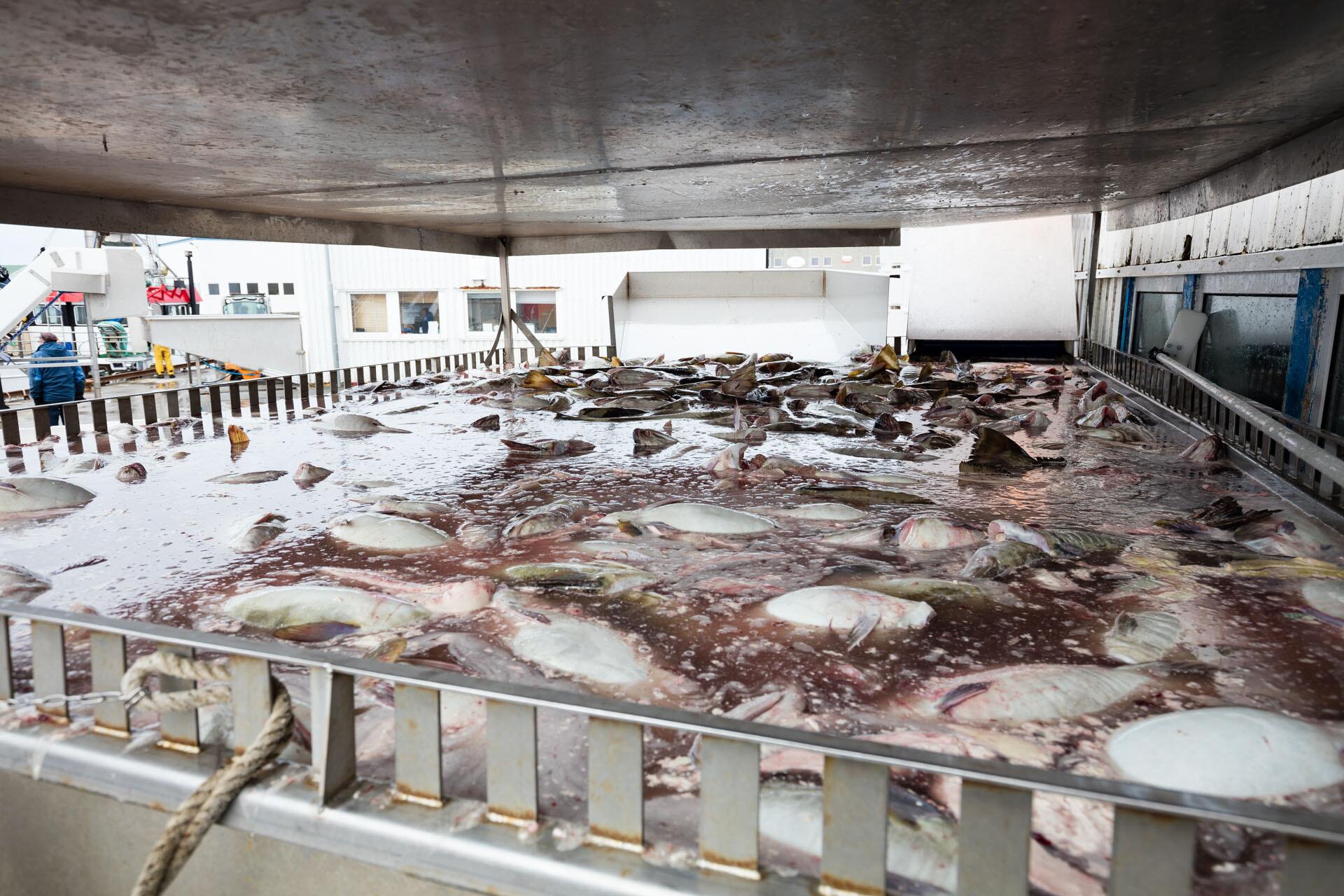
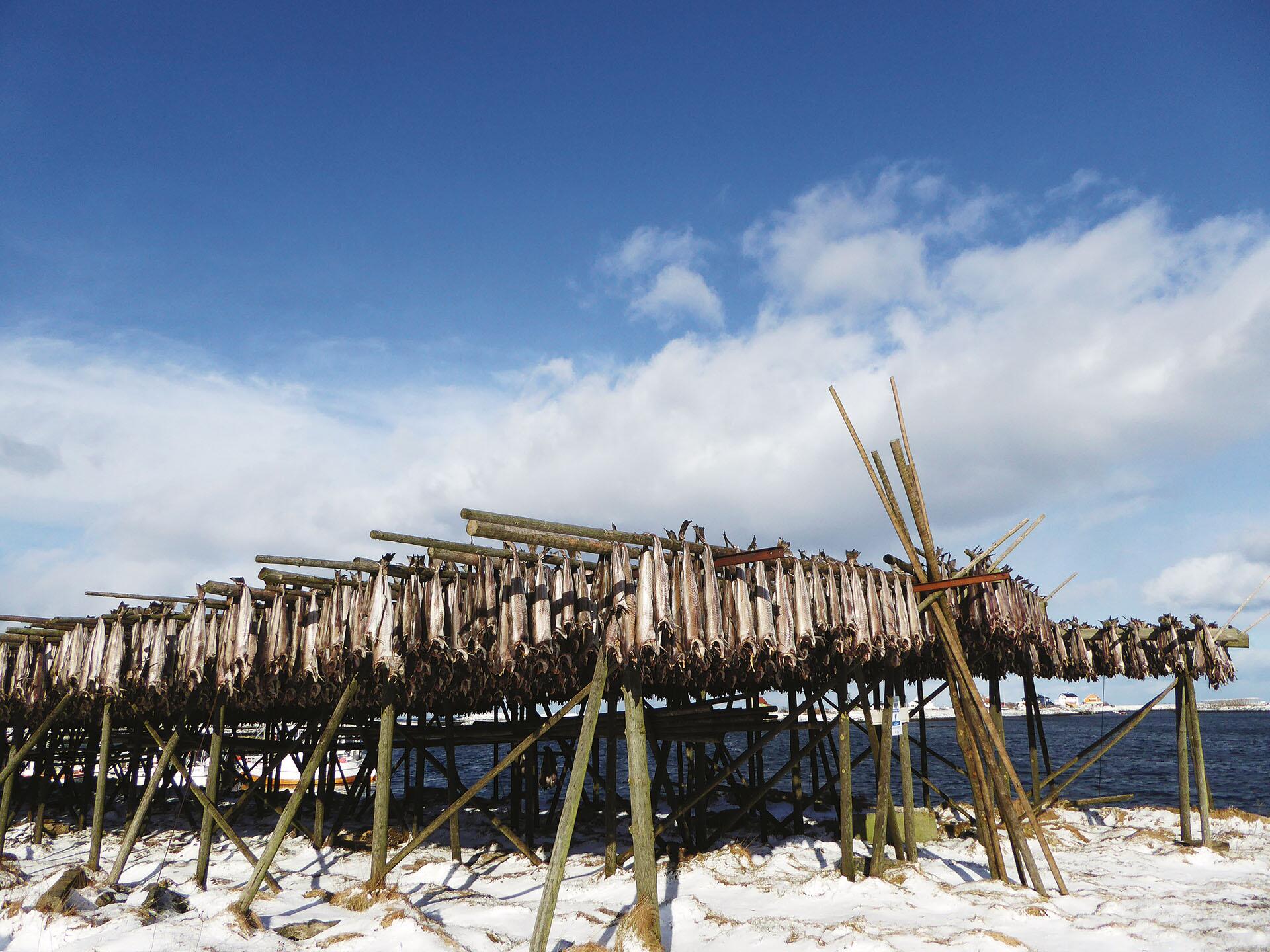

The Norwegian word for stockfish (tørrfisk) comes from the old Norwegian word of þurrfiskr, the word turrur fiskur still being used on the Faroe Islands. Stockfish can be produced from a number of lean fish. We, however, here mean stockfish produced from spawning cod. Enormous amounts of spawning cod (the ready to spawn Arcto-Norwegian cod) have always come to Lofoten between January and April. Spawning cod (skreið in old Norwegian) is a migrating cod which can migrate far. It comes all the way from The Barents Sea. The spawning cod fishing tradition also extends all the way south to the county of Møre, although has been primarily centred on Lofoten.
To Lofoten to spawn
The cod first moves along the outer side of the Lofoten islands and then moves to the inner side, into Vestfjorden. Some continue all the way into Lofoten to spawn, so forming the basis for the long fishing tradition here. A great deal of fish also stops by Røst. Where and when the main arrival and spawning takes place varies from year to year and determines whether the Lofoten fishing year is good or poor.
Fishery for a thousand years
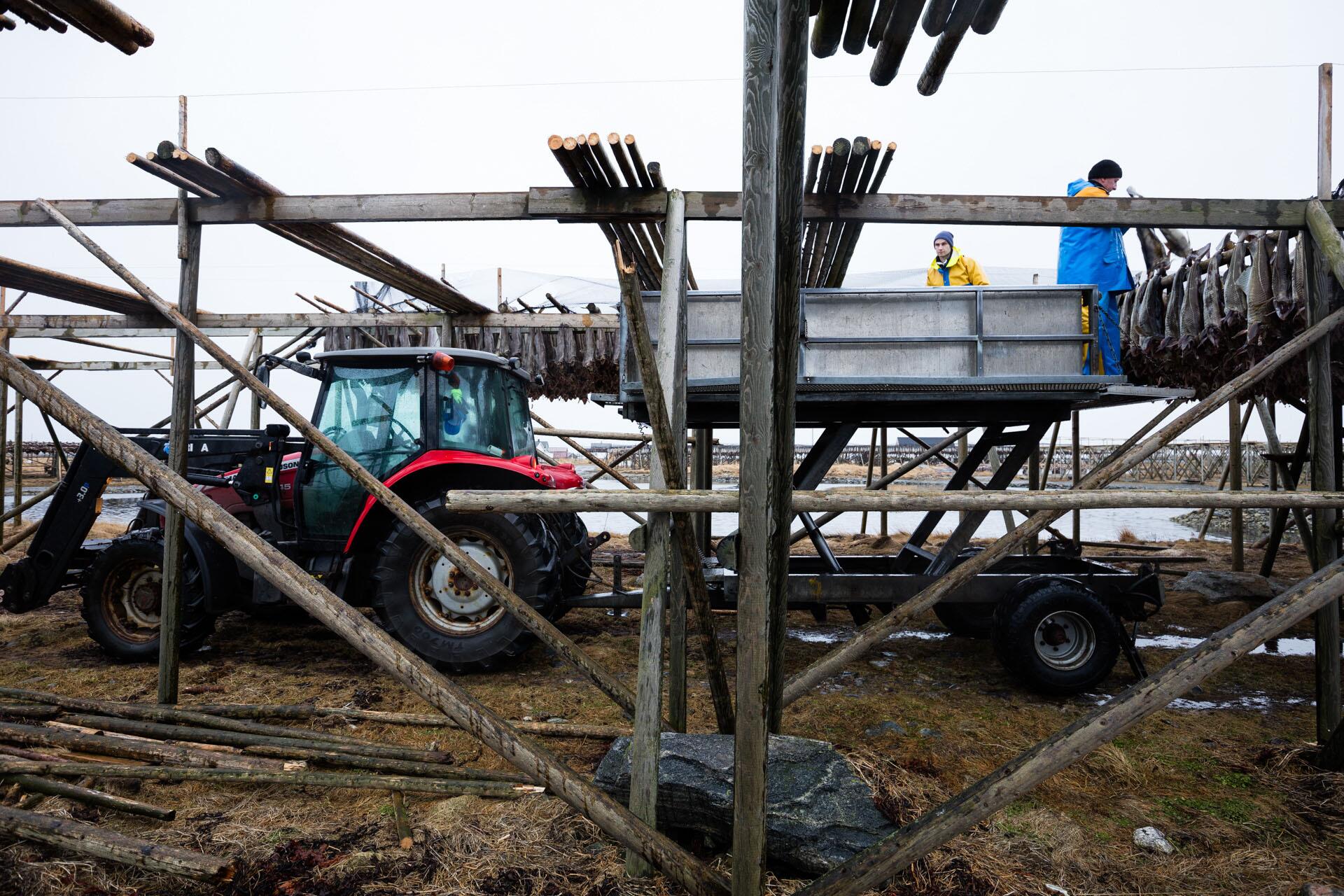
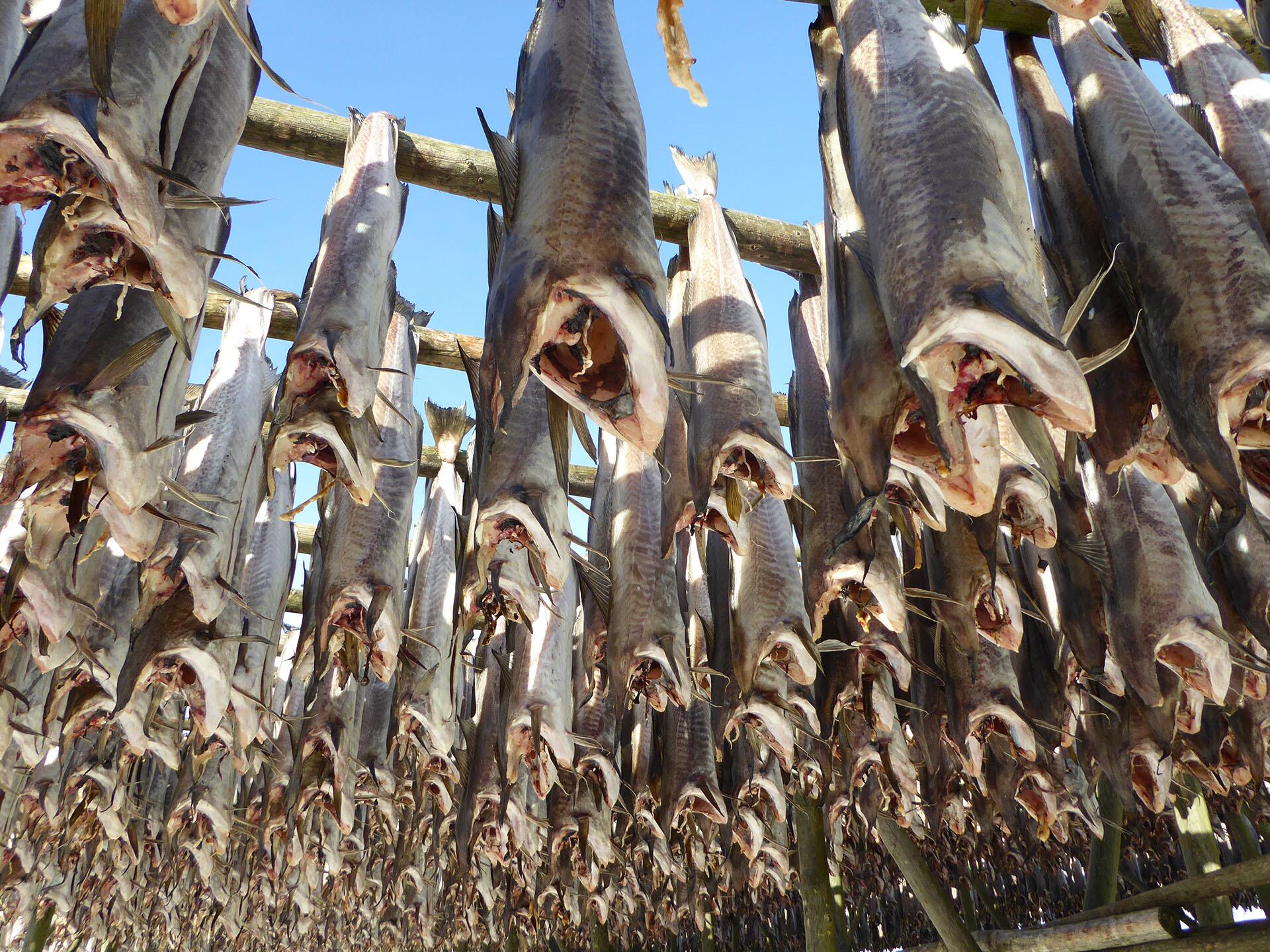
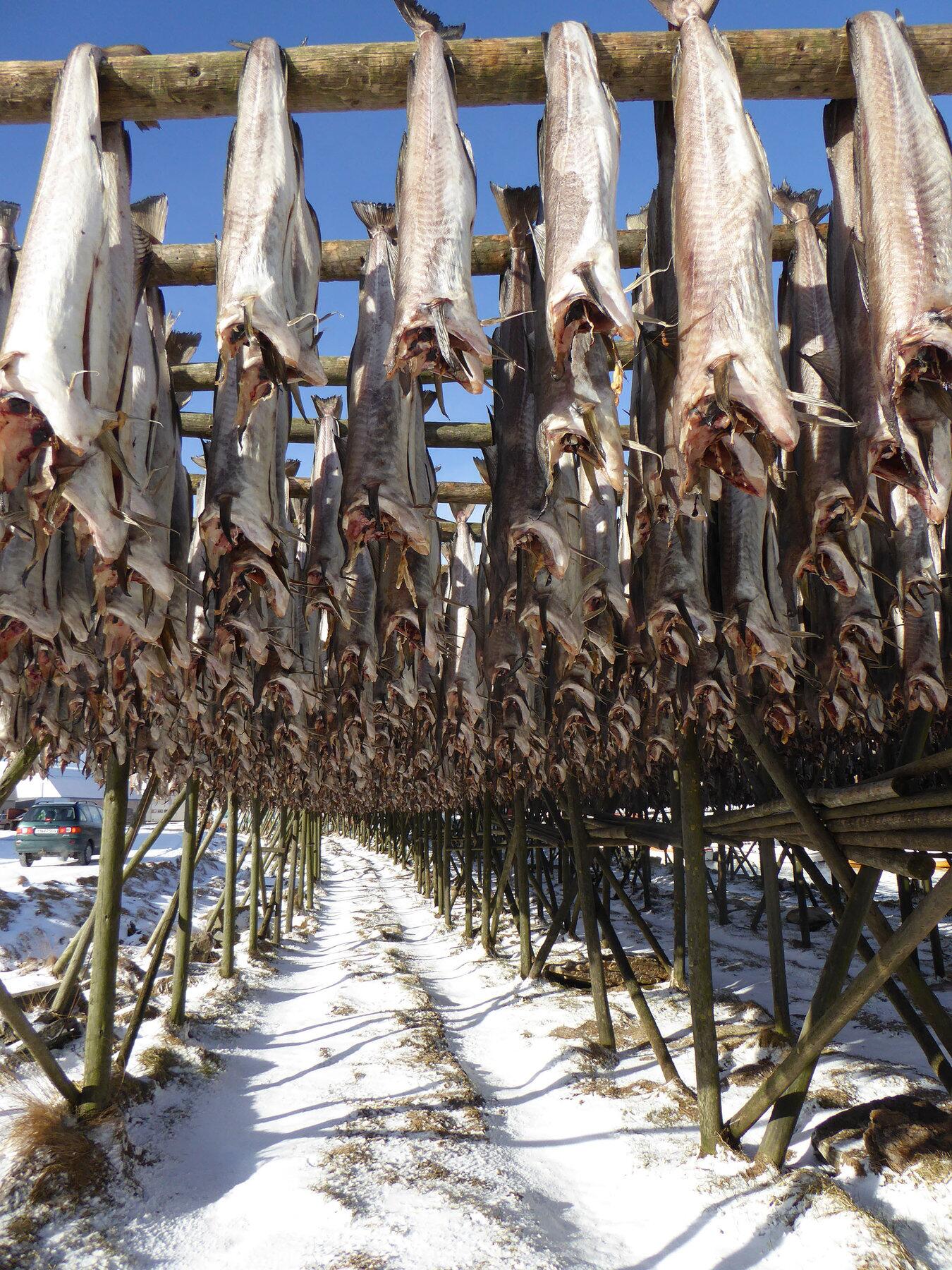
The fishing of migrating spawning cod can be traced back across a thousand years or more and so can the drying of the fish. The weather and climate however play an important role in catching such large amounts of fish. An amazing aspect of this tradition is, however the coinciding of the arrival of the spawning cod with the favourable season for drying. On Røst, spawning cod is hung on racks in January immediately after it is brought ashore and left to the beginning of April.
Super conditions on Røst
Fish drying conditions on Røst are among the very best. Mild winters without much frost which can damage the fish, a cold spring and summer, the right humidity, plenty of wind and the right amount of sun. Everything needed to produce high quality stockfish. If the fish had arrived in the summer or the autumn, then the weather would have been too hot and humid for drying.
The stockfish is dry and ready to eat from the middle of May to the end of June.
https://en.wikipedia.org/wiki/Stockfish
Stockfish – an ancient product
Drying is one of the oldest food preservation methods we know of and stockfish has been produced ever since trappers first discovered that fish that was hung to dry under favourable conditions could be stored for a long period of time. Catch sizes could vary greatly and the ability to have onboard provisions, which included stockfish, with long storage lifetimes was a necessity on long fishing voyages. The salting of fish along the Norwegian coast is a significantly more recent phenomenon, even though we know that some sea salt was produced here in the Middle Ages.
Organised Norwegian Arctic cod fishing
Organised fishing for spawning cod on Lofoten is believed to have begun early. Egil’s Saga tells about Torolv Kveldulvsson on the Sandnes farm on Alsta in around the year 875:
In the spring Torolv returned to his farm. He then sent people out to fish Atlantic cod in Vågar and some to fish herring …. Torolv had a large ship which was suitable for sea crossings. … He loaded spawning cod, hides and stoat hides and sent them with a great deal of squirrel winter fur hides and other leather products which he had brought with him down from the mountains … He allowed Torgils Gjallande to sail the ship west to England to buy cloth and other things which he needed…. They made good bargains, loaded the ship with wheat and honey, wine and cloth and returned home in the autumn.
Original text: Elisabeth Johansen, Anne Cecilie Pedersen, Einar Stamnes TØRRFISK – kystkultur, kokekunst, Querini, Orkana 2018
Reference work:
Heggstad, Leiv. (1962) Egilssoga. Oslo: Det norske Samlaget
Nilsson, Magnus. (2015) The Nordic Cook Book. London: Phaidon Press Limited
Translation to English: Alasdair Graham-Brown
Illustrations: Kjell Ove Storvik 1–5, Elisabeth Johansen 6–8