


















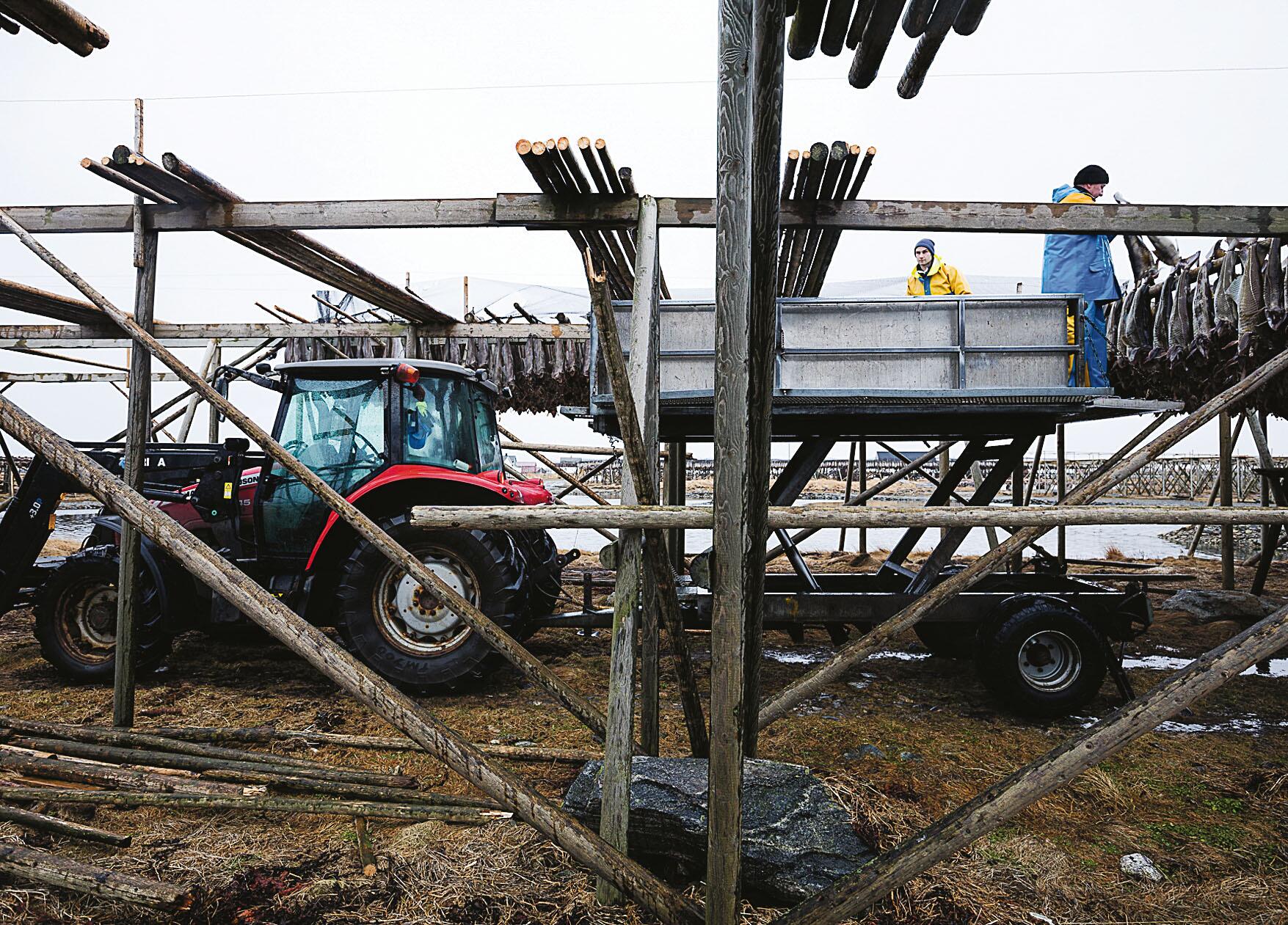
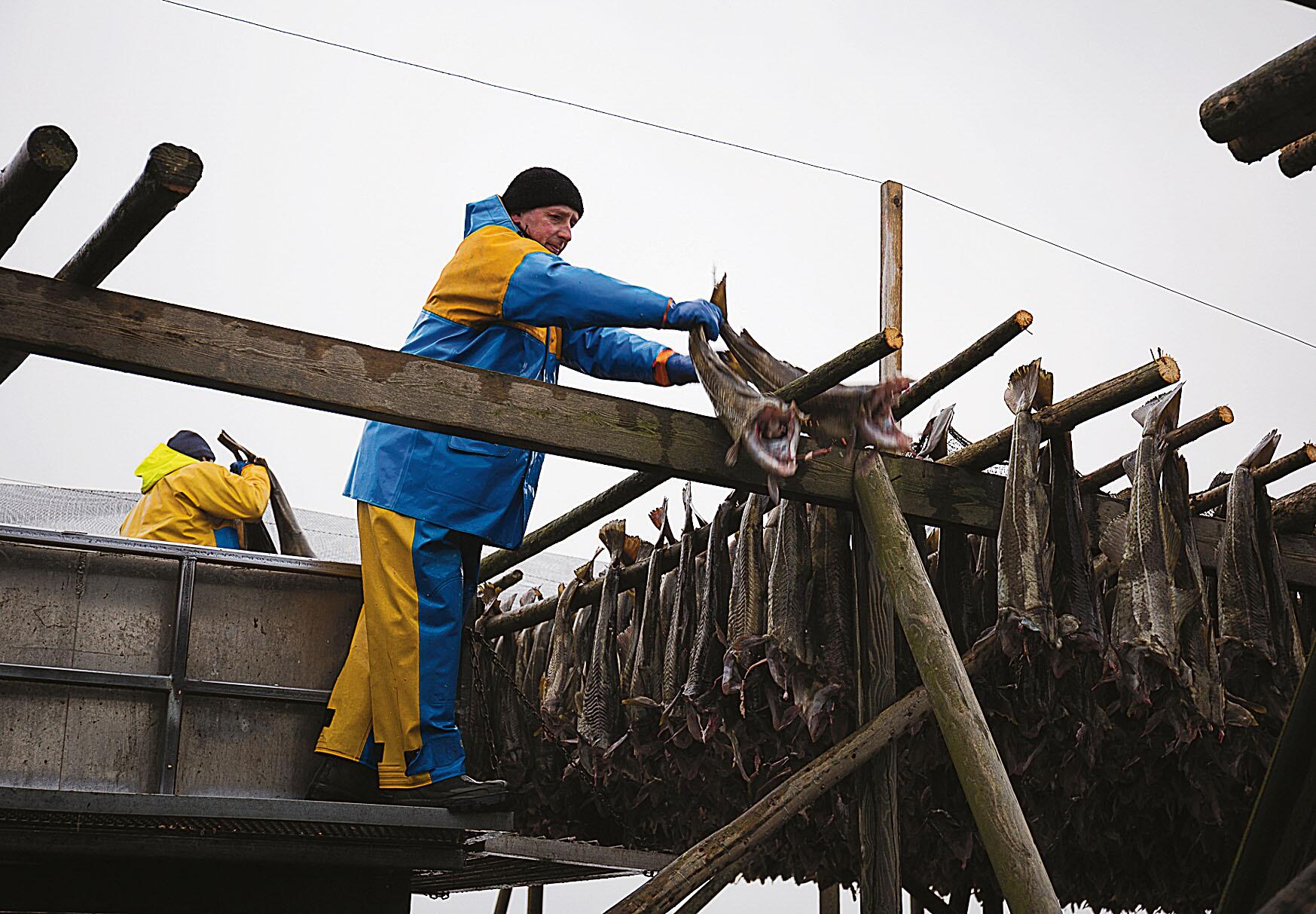
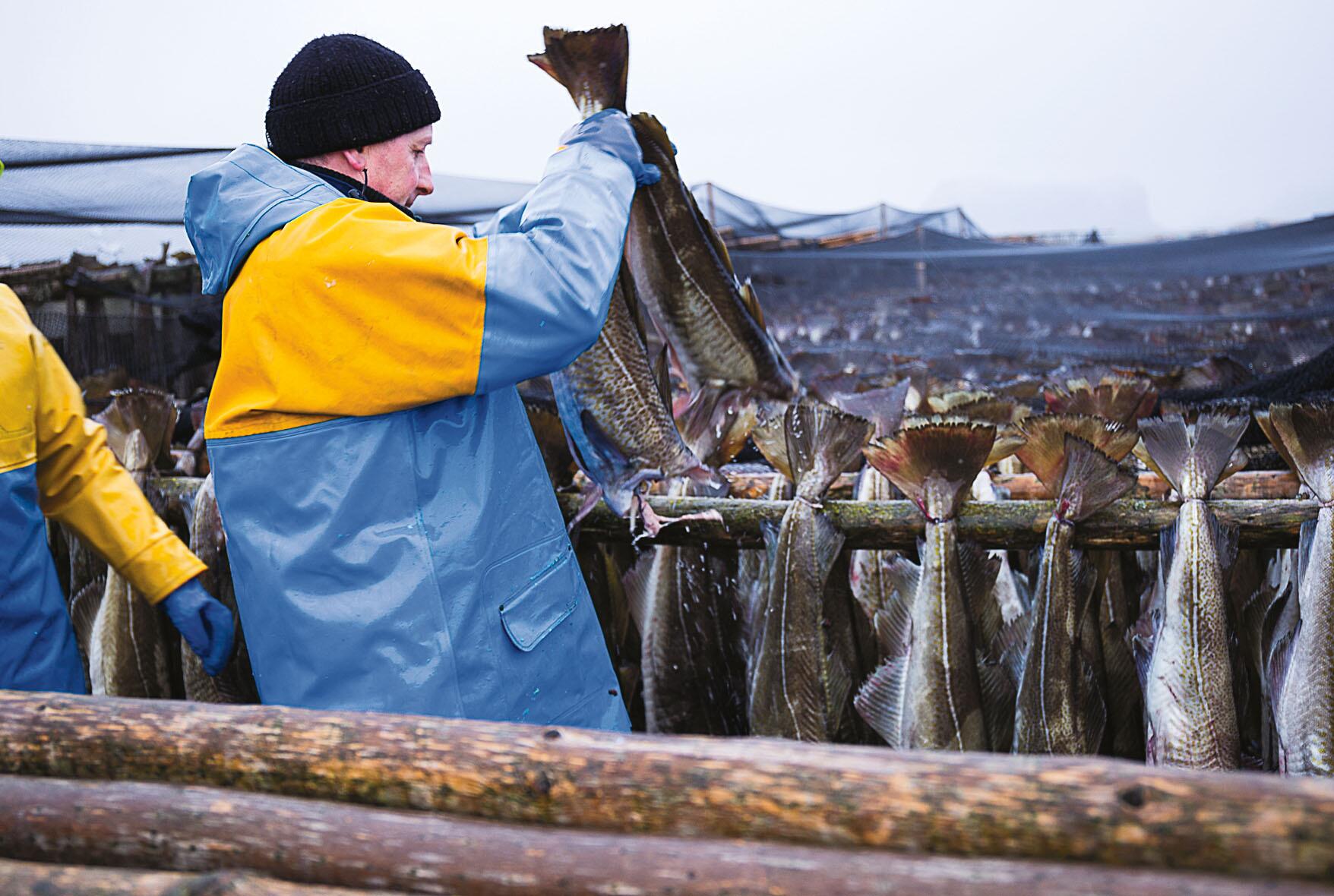
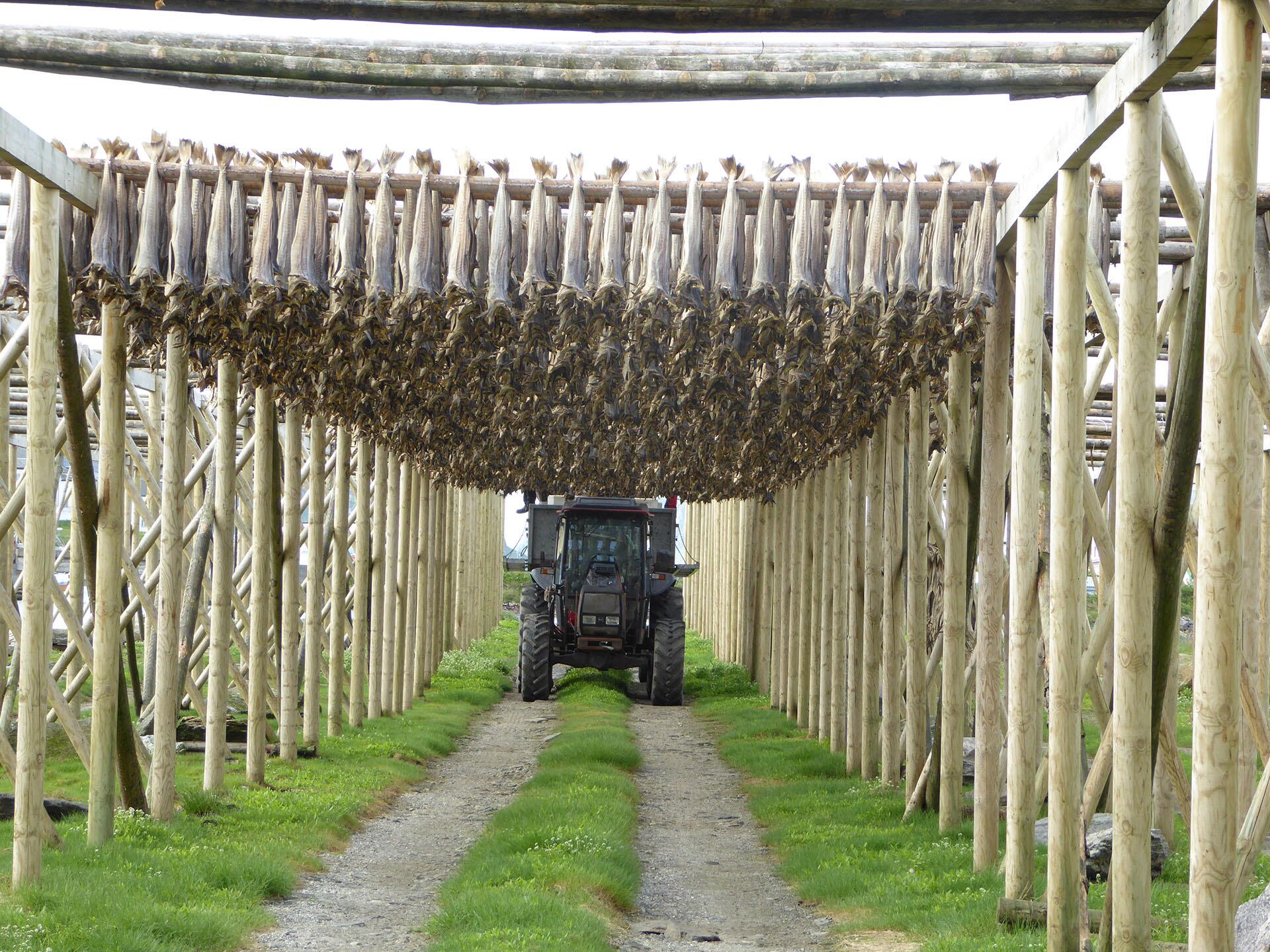
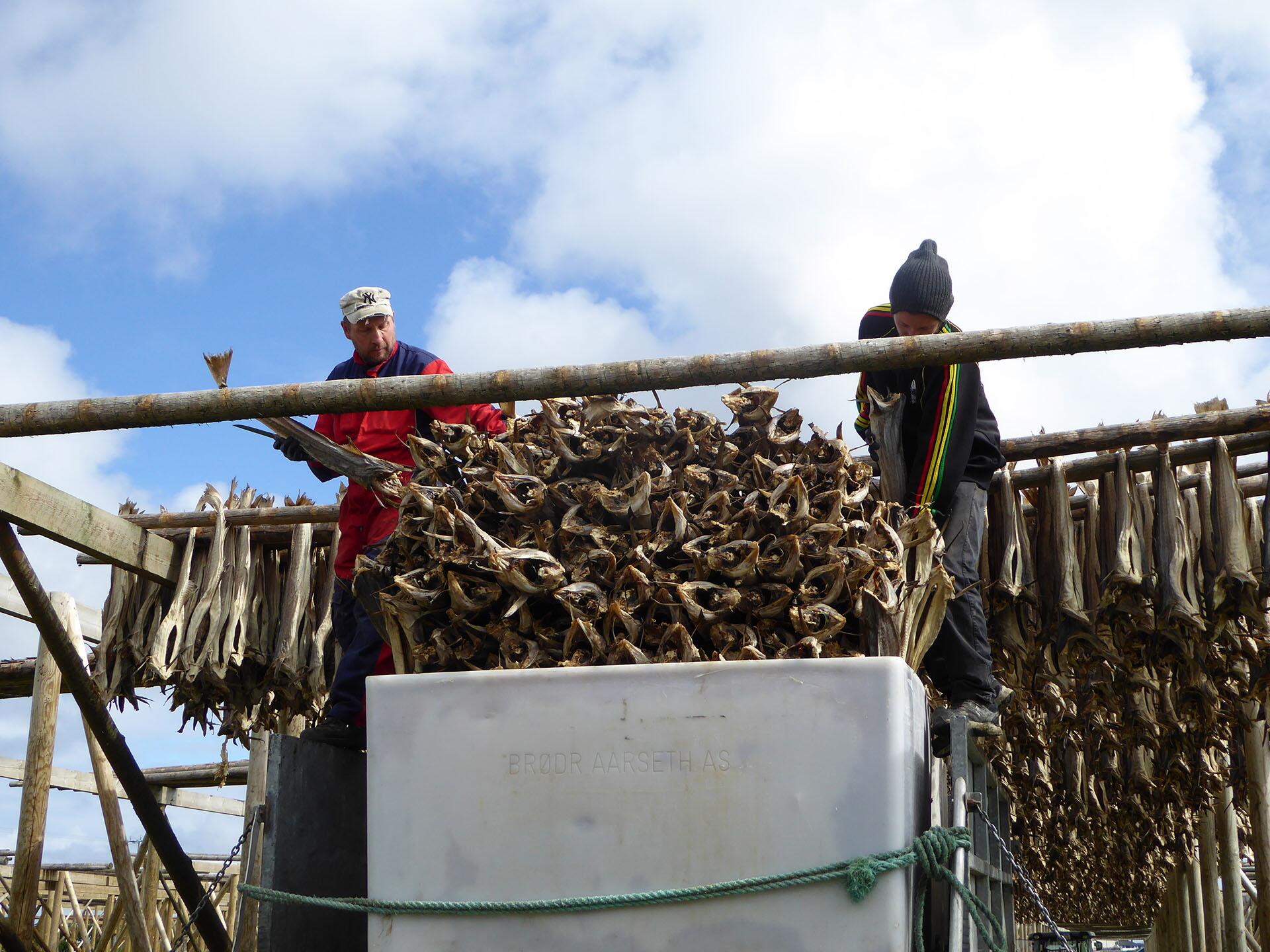
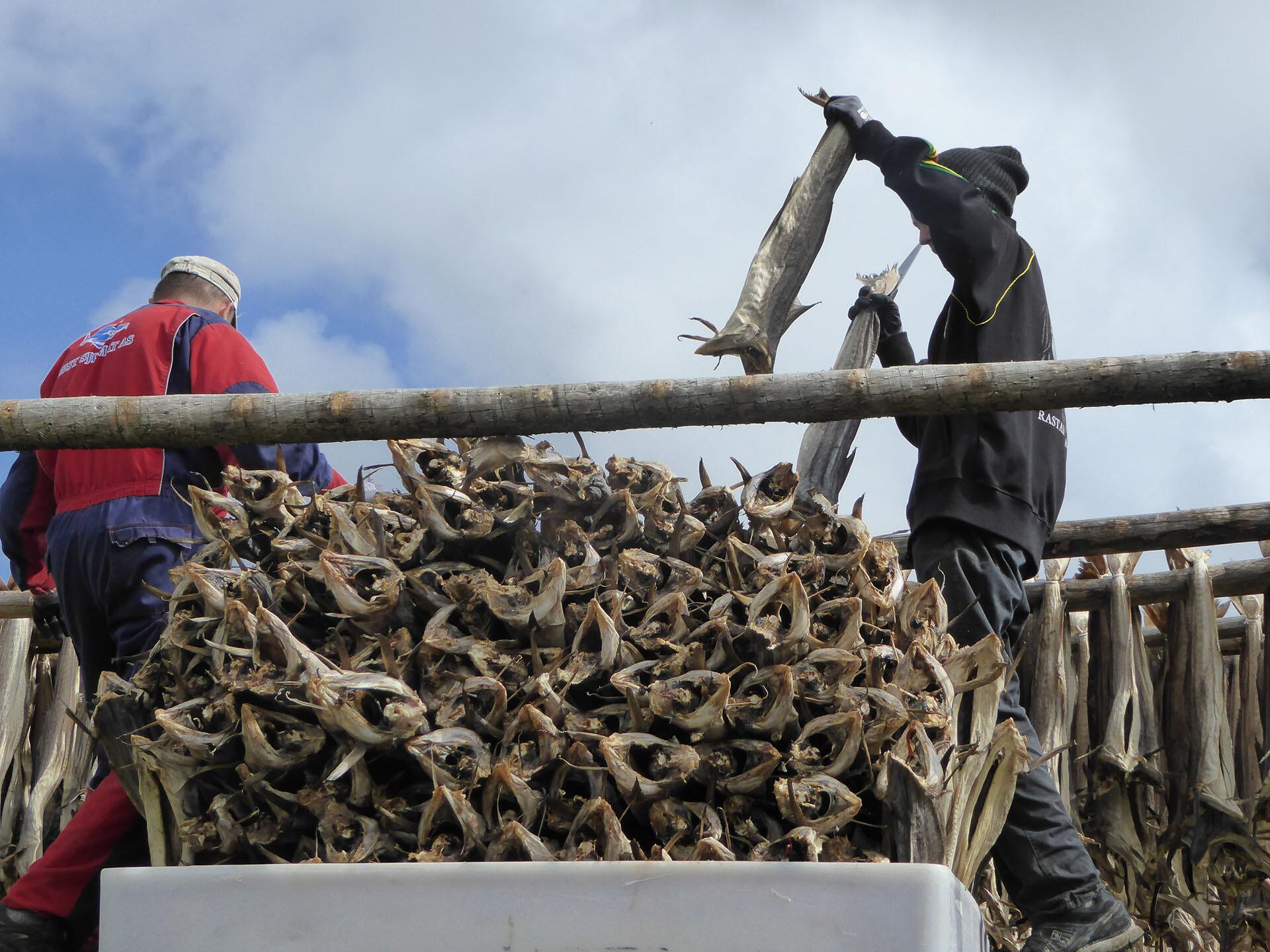
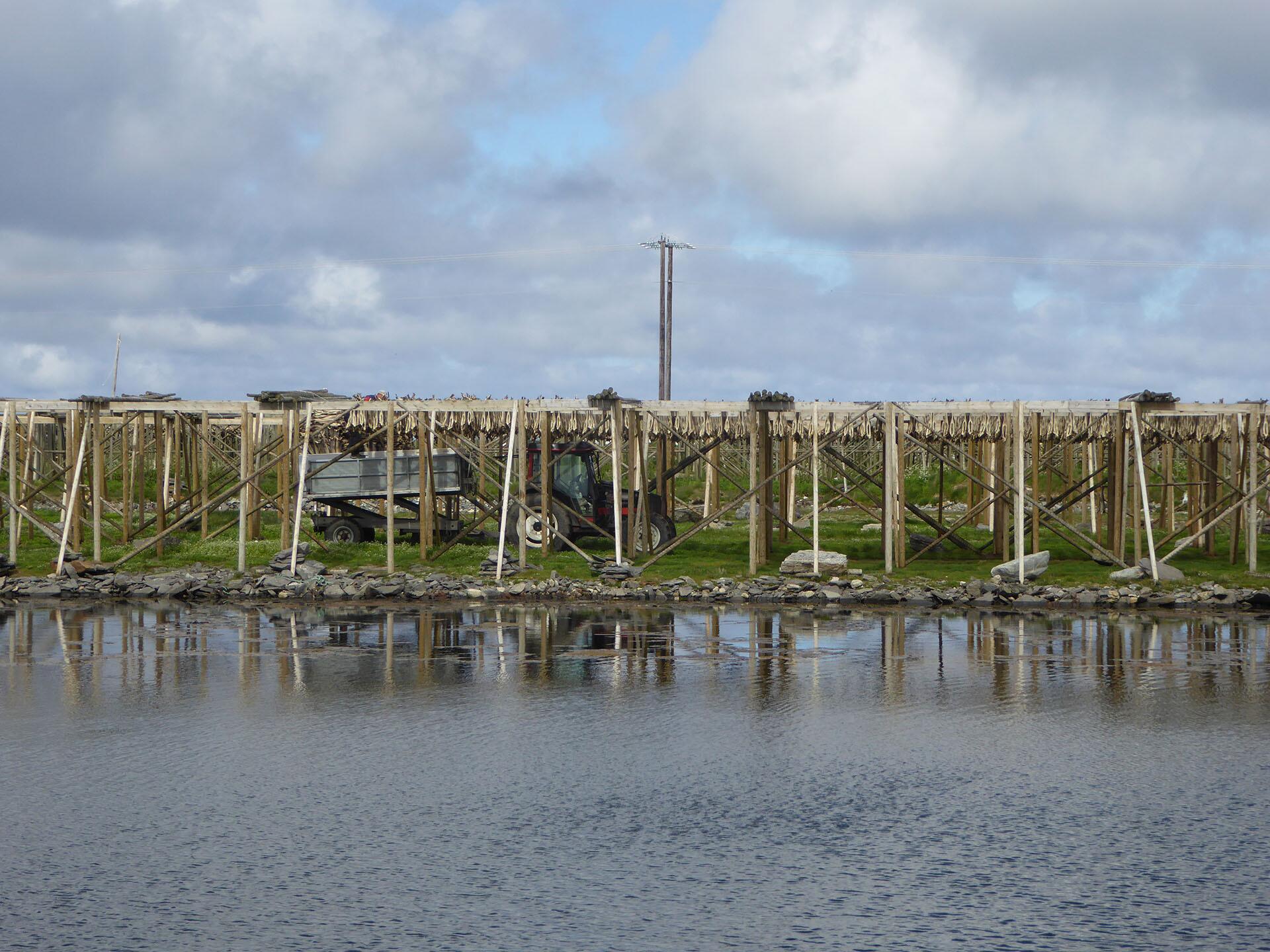
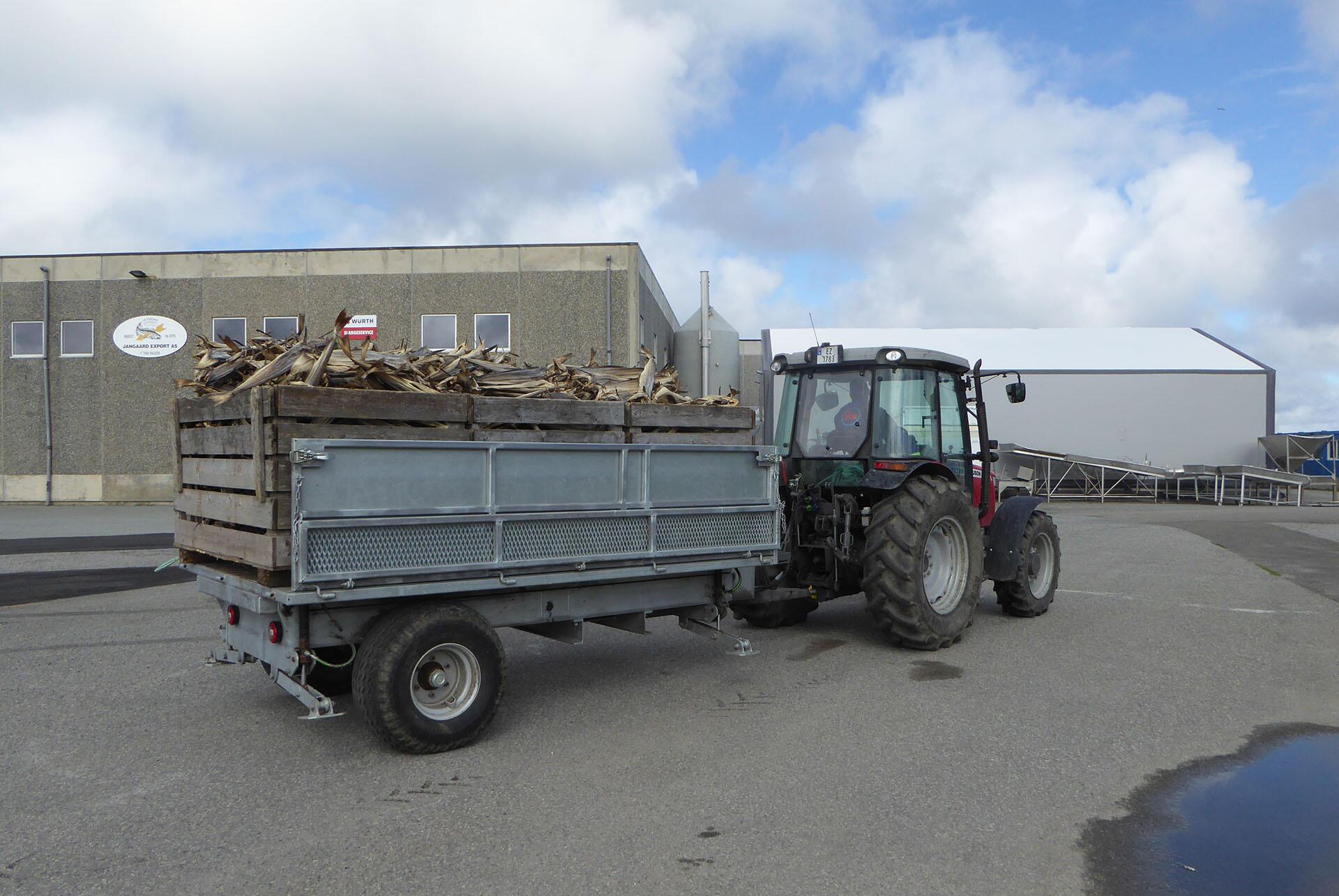

The racks on Røst are built so that tractors can easily drive under them. The height of the racks is also designed so that the working position on the flatbed of those who hang the fish is comfortable. Tons of fish are lifted and hung by hand each day in the course of the spawning cod season.
With the belly facing the north
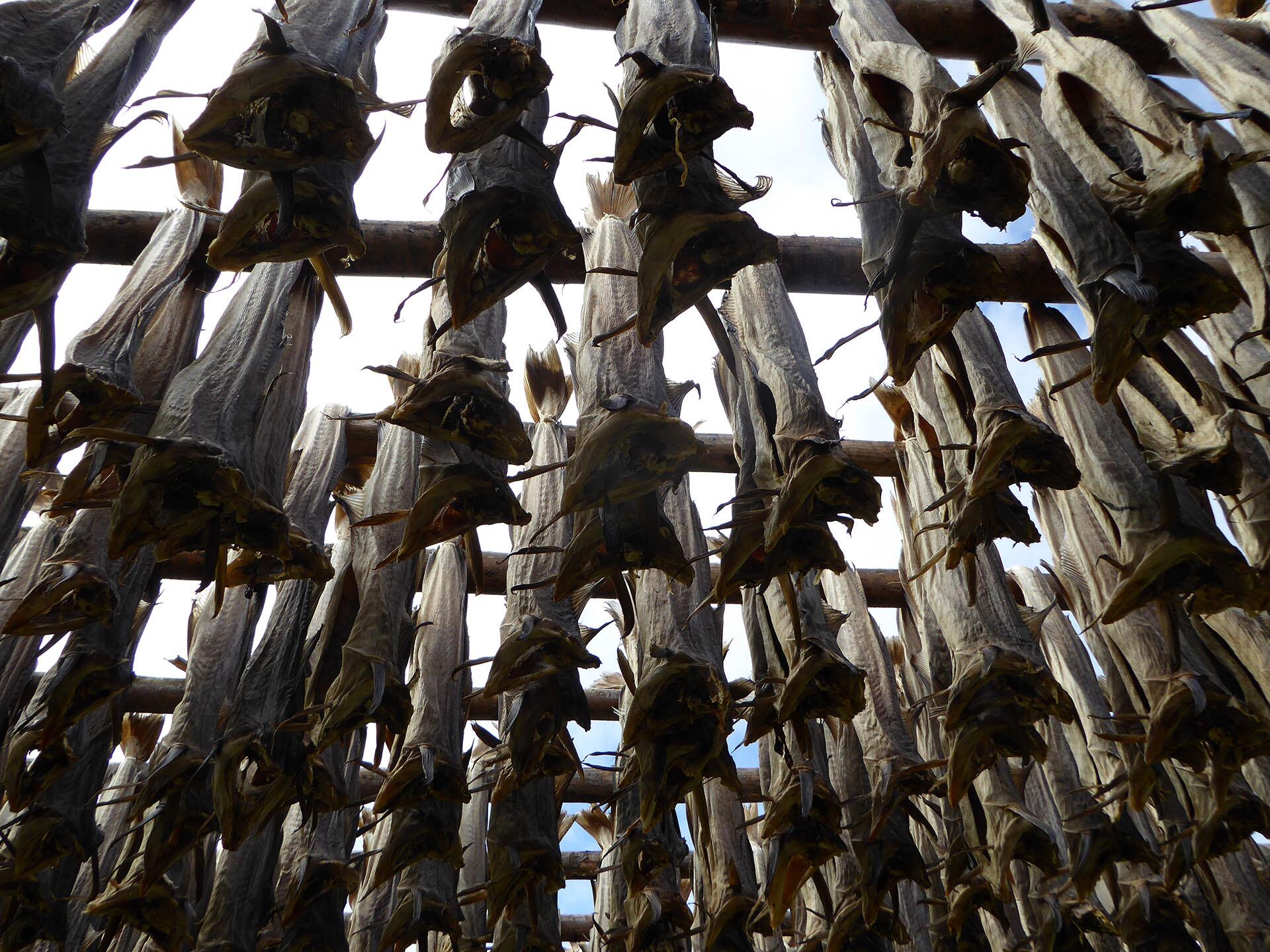
Two fish are hung together by the tail, the pairing called in Norwegian 'sperre'. The paired fish are hung over the rack bars. It is important that the fish are hung with the belly facing the north. Rain from the southwest is heavy on Røst, as it is across Lofoten. It is therefore important that the open belly does not hang facing south or southwest, so collecting rain. Collected rain reduces drying and can result in poorer quality of finished stockfish.
Til sortering og modning
Stockfish producers on Røst know exactly when the fish was hung on each of their many racks. When the fish is brought in from the racks depends, however, on when it was hung and on drying conditions. Sometimes in May, but usually in June, the hanging lines then being cut, the fish being put in boxes and tubs and brought in for first sorting and maturing.
Mild climate
Temperature and humidity are important factors in drying. Røst’s climate is, however, mild and the average temperature is above freezing all year round. The island group is at the far end of Lofoten and is therefore the northernmost place in the world which does not have a winter with sub-zero temperatures. This makes it perfect for hanging fish outside in the weather and wind after being landed in January.
Bursting of fish cells
There are periods of frost during the winter further east in the Lofoten chain and a risk here that the fish will be ruined before the milder temperatures of February and March arrive. Frost leads to the bursting of fish cells and to poor rehydration during soaking.
Many factors determine the quality classes
Temperatures can also be too high and the skin and outer parts of the fish can then dry too quickly, locking moisture and fluids behind the skin. The fish can then sour and in the worst case begin to rot. Flies can also, in mild weather, come out of hibernation and lay eggs in the fish. On Røst, however, the wind blows so often and hard that flies cannot land and lay on the fish, as the local saying goes.
There are many factors that determine the three quality classes, which are:
Prima – First class
Sekunda – Second class
Tipo B – African quality
Original text: Elisabeth Johansen, Anne Cecilie Pedersen, Einar Stamnes (eds.): TØRRFISK – kystkultur, kokekunst, Querini, Orkana 2018.
Translation to English: Alasdair Graham-Brown
Illustrations: Kjell Ove Storvik 1–3, Elisabeth Johansen 4–10